Four Seasons Bora Bora review: overwater villas with Mount Otemanu in the window
Motu Tehotu, Bora Bora — five nights in an overwater bungalow
FlexStays Editorial · 25 January 2021 · 7 min read · Our score 9.4/10
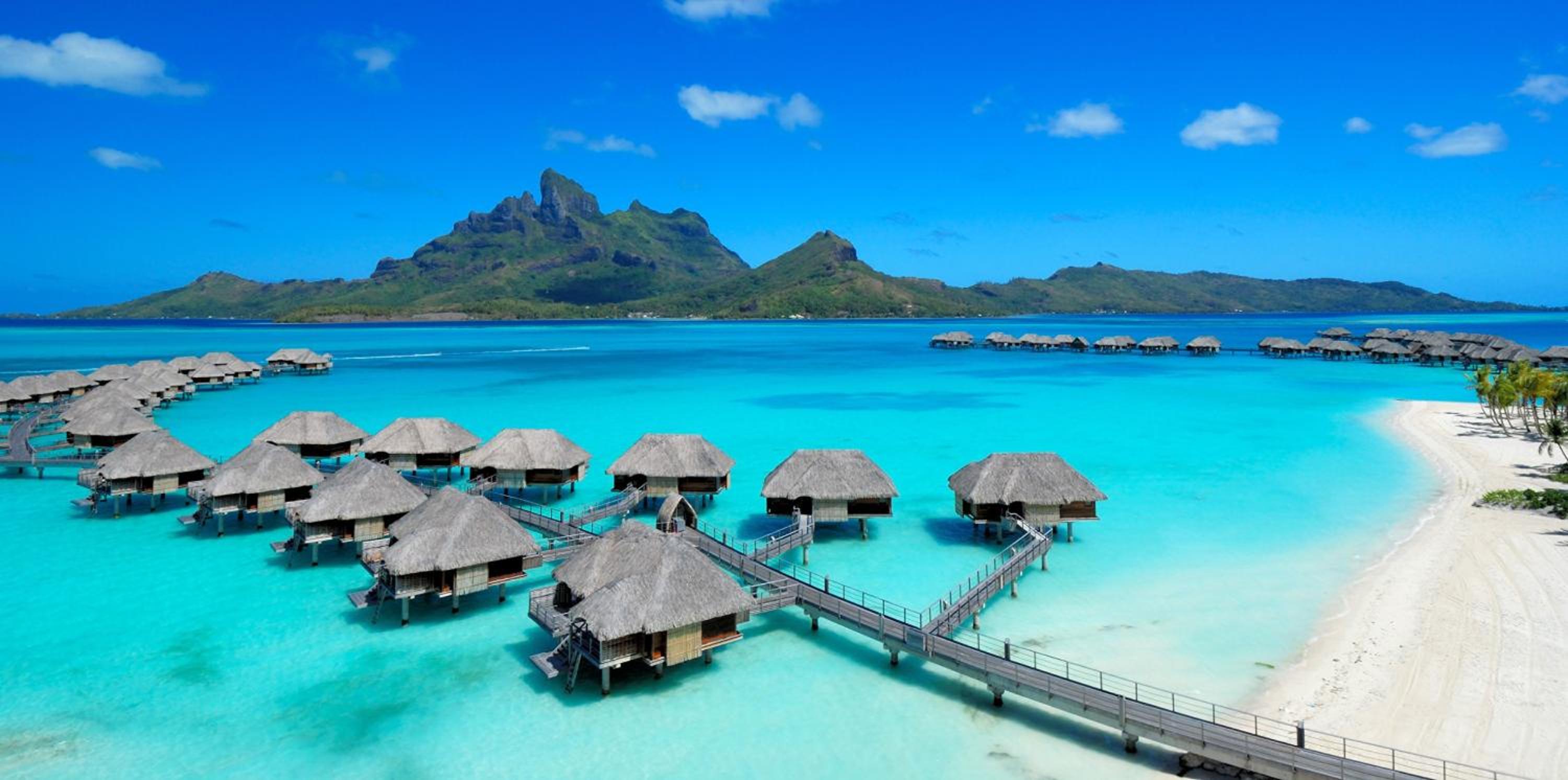
The lagoon really is that colour. What matters is which villa faces the mountain, and which months cost thousands less.
What we liked
- Overwater bungalows with glass floors and direct lagoon access
- Protected inner lagoon that is calm and swimmable all day
- Excellent snorkelling straight off the deck
Worth knowing
- Getting there is long and expensive from anywhere
- Food and drink costs are high even by resort standards
- Mountain-view villas cost significantly more than sunset ones
The geography of Motu Tehotu
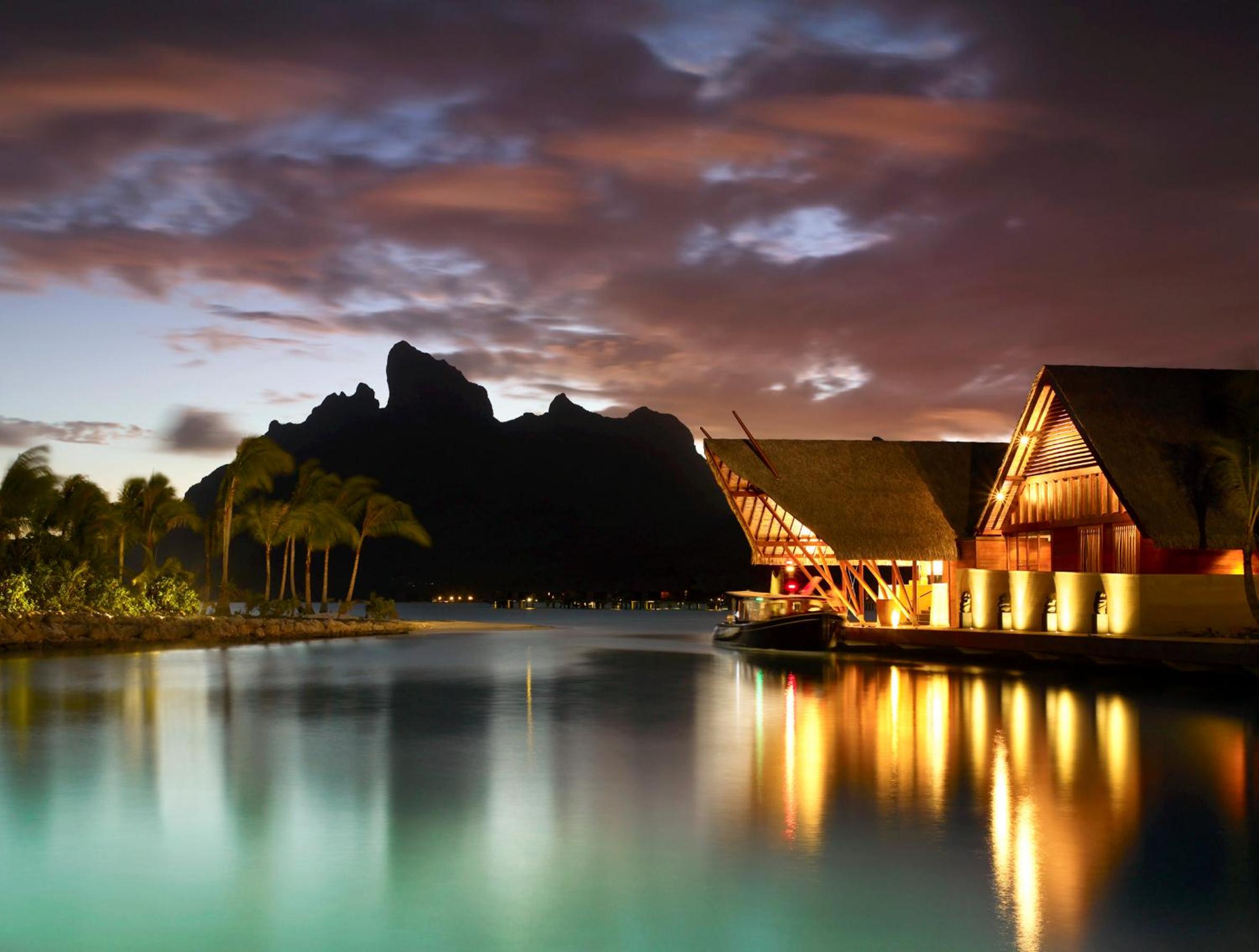
The Four Seasons Resort Bora Bora occupies a stretch of Motu Tehotu, a coral islet situated on the outer reef that encircles the main island. This specific positioning is fundamental to the guest experience, as it places a massive, shallow, and remarkably calm lagoon between the resort and the jagged volcanic silhouette of Mount Otemanu. Unlike properties on the main island, which may feel tucked against the jungle, the motu provides a sense of isolation and expansive horizon. The water here transitions through an improbable spectrum of blues, from a milky turquoise near the white sand beaches to a deep navy where the reef drops away into the Pacific.
The journey to this remote enclave is an exercise in logistics that begins long before touchdown at the airport. Most international travellers arrive via Air Tahiti Nui into Papeete, followed by a local transfer flight to Bora Bora's own airstrip. From there, the resort operates its own custom-built wooden launches to ferry guests across the water. It is a long and undeniably expensive transit from almost anywhere in the world, yet the efficiency of the greeting service at the airport mitigates the fatigue. The arrival at the resort jetty, with the mountain looming large, serves as the definitive signal that the investment in travel time was justified.
Living above the lagoon
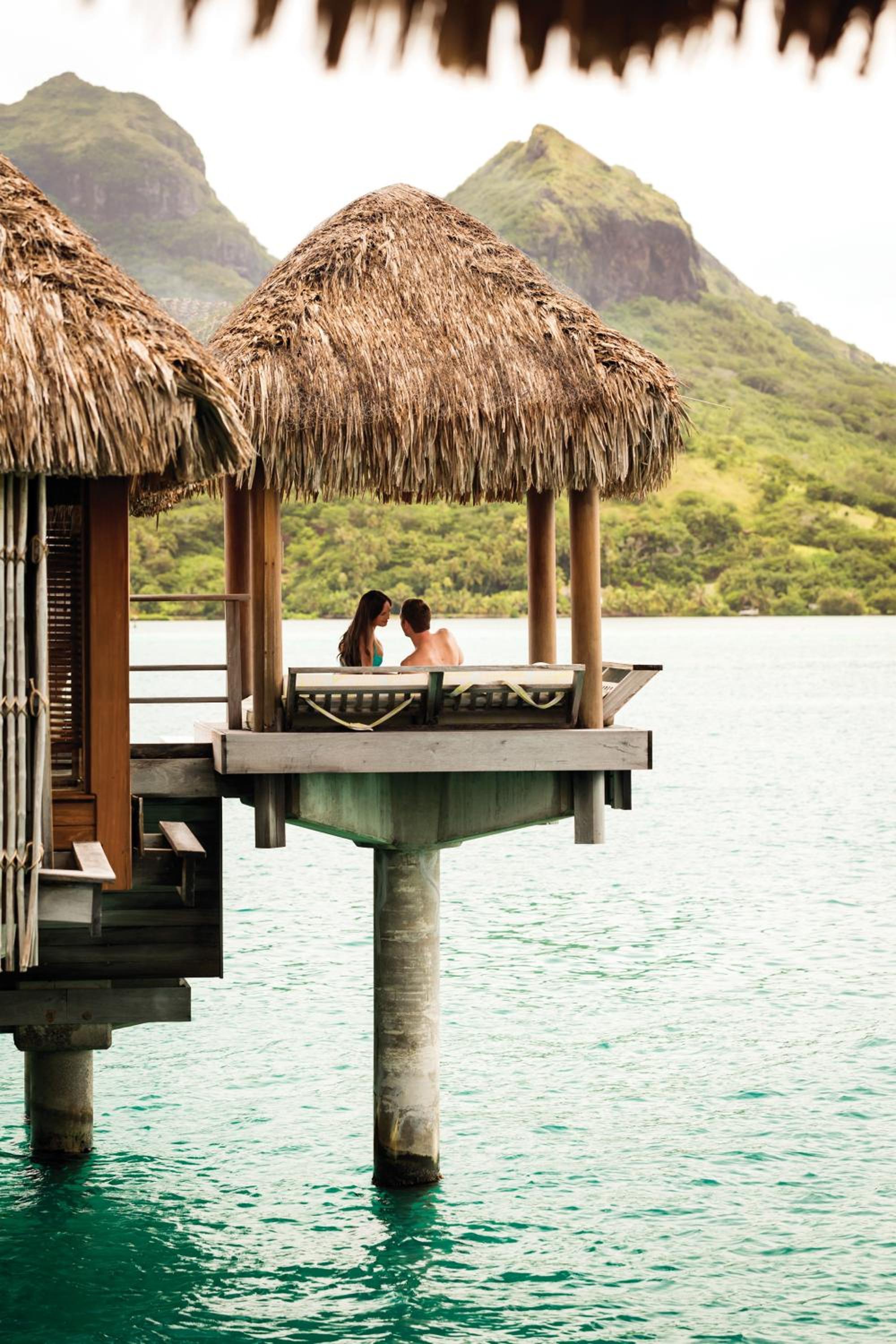
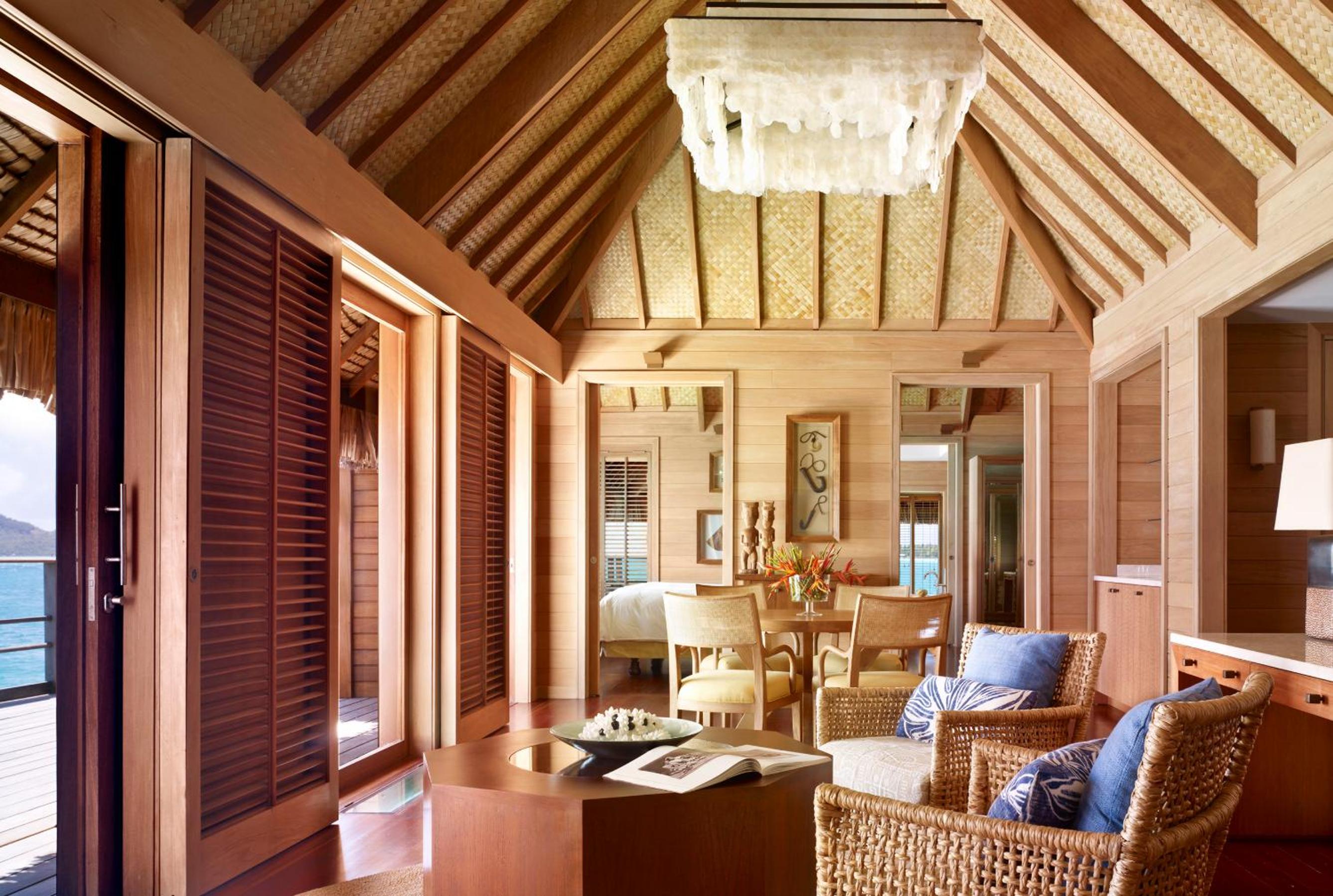
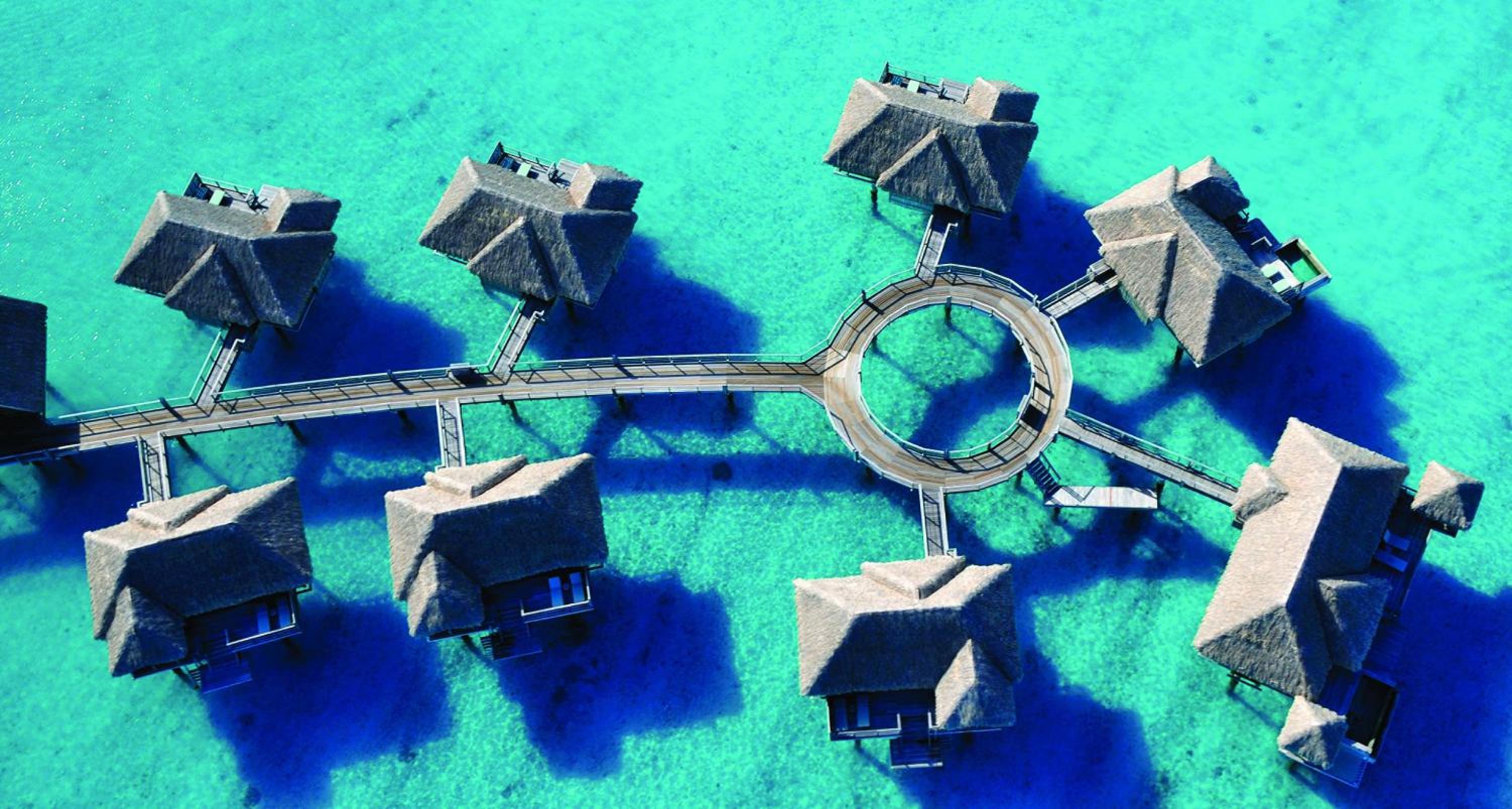
The architecture of the overwater bungalows leans heavily into traditional Polynesian aesthetics, featuring high vaulted ceilings thatched with pandanus leaves and walls clad in local timber. These are large, airy structures designed to blur the line between indoor and outdoor living. The most significant design feature is perhaps the glass floor panels, strategically placed so that the activity of the lagoon's resident rays and reef fish can be observed from the comfort of the lounge. Each villa is built to provide a high degree of privacy, with deep decks that offer direct access to the water via a lower platform and a freshwater outdoor shower for rinsing off the salt.
While the lower-tier villas are expansive, the upper categories introduce private plunge pools that seem to spill directly into the ocean. However, the most critical decision during the booking process is not the pool, but the orientation. The resort is split between villas that face the open ocean for sunset views and those that face inward toward the mountain. The mountain-view villas carry a significant price premium, yet for many, the sight of Otemanu’s emerald peaks framed by the bedroom window is the primary reason for visiting. Those who opt for the sunset side trade the iconic mountain view for uninterrupted horizons and slightly more privacy, as they face away from the resort’s internal traffic.
A sanctuary for marine life
One of the resort’s most commendable features is the Lagoon Sanctuary, an inner waterway that serves as a protected environment for local marine life. This area is far more than a decorative pond; it is a functioning ecosystem managed by on-site marine biologists. Because the water here is shallower and more protected than the open lagoon, it remains calm and swimmable throughout the day, regardless of the wind conditions on the outer reef. Guests can participate in coral grafting programmes or simply snorkel through the dedicated channels where the visibility is consistently excellent, even for novices who might be intimidated by the open sea.
Snorkelling is not restricted to the sanctuary, as the water directly beneath the villa decks is teeming with activity. It is entirely possible to be among schools of sergeant majors and the occasional blacktip reef shark within thirty seconds of leaving your room. The resort provides high-quality masks, fins, and paddleboards as part of the standard programme, and the equipment is well-maintained. For those seeking a deeper connection with the environment, the guided tours led by the marine biology team offer a grounded, educational perspective on the fragile reef systems of French Polynesia, moving beyond the superficiality of typical resort excursions.
Polynesian flavours and the cost of dining
Dining in this corner of the world is a logistical marvel, given that almost all high-end ingredients must be flown or shipped in. This reality is reflected in the menu pricing, which is exceptionally high even by international luxury resort standards. The main restaurant, Arii Moana, focuses on refined Mediterranean and Polynesian fusion, while the beachside options offer more casual fare like poisson cru, the local specialty of raw tuna marinated in coconut milk and lime. The quality is consistently high, with a focus on fresh seafood, but the bill for a standard three-course dinner can be startling for the unprepared.
To manage the substantial running costs of food and drink, savvy travellers should investigate half-board or full-board packages at the time of booking. These arrangements usually work out to be considerably more economical than paying à la carte over a five-night stay. Breakfast is a highlight, featuring a sprawling buffet of tropical fruits, house-made pastries, and hot dishes that cater to a global clientele. While there are a few local eateries on the main island accessible by boat, the cost of the transfer and the convenience of staying on the motu means that most guests will take the majority of their meals within the resort grounds.
Wellness and the overwater spa
The Te Mahana Spa is situated at the edge of the property, overlooking the lagoon and the Pacific beyond. The treatment rooms are designed to take advantage of the setting, with some featuring glass floors beneath the massage tables so guests can watch the water during their treatments. The menu is inspired by traditional Tahitian techniques, utilising local ingredients like monoi oil, vanilla, and black pearl powder. It is a quiet, contemplative space that feels distinct from the more active areas of the resort, providing a genuine sense of retreat for those looking to decompress after the long journey.
Beyond the spa, the resort features a large infinity pool that serves as the social heart of the property. While the overwater villas offer private swimming access, the main pool is surrounded by comfortable cabanas and provides a different perspective of the beach. For those who prefer to stay active, the tennis courts and fitness centre are well-equipped, though the humidity often makes outdoor exercise a challenge during the middle of the day. The service at the pool and beach is attentive without being intrusive, with staff regularly circulating to provide chilled water, towels, and the occasional fruit skewer.
Service with a local soul
The service culture at the Four Seasons Bora Bora strikes a delicate balance between the brand's global standards and the natural warmth of Polynesian hospitality. There is an absence of the stiff formality found in some European luxury hotels; instead, the staff are engaging and genuinely knowledgeable about their island home. Whether it is the concierge arranging a private boat charter or the housekeeping team ensuring the villa is stocked with fresh ice and water, the attention to detail is evident. They manage the complex logistics of a remote island resort with a quiet efficiency that ensures the guest experience remains seamless.
This level of service is particularly beneficial for families and couples alike. While the resort is a premier honeymoon destination, it is surprisingly well-equipped for children, with a dedicated kids' club and activities that focus on the local environment. For couples, the resort excels at creating private moments, such as romantic dinners on the beach or excursions to a private motu for a picnic. The staff are adept at reading their guests, knowing when to provide high-touch service and when to step back and allow the natural beauty of the surroundings to take centre stage.
The verdict on value and timing
Determining whether the Four Seasons Bora Bora is worth the substantial investment depends largely on one's expectations of a tropical escape. For a honeymoon or a milestone celebration, it is one of the few places globally that truly lives up to its glossy marketing materials. The lagoon does the heavy lifting, providing a natural spectacle that never becomes tiresome, while the resort provides a comfortable, high-end base from which to enjoy it. However, potential guests must be realistic about the ancillary costs; beyond the room rate, the expenses for dining, drinks, and activities will add a significant percentage to the final bill.
Timing is the most effective way to influence the total cost of the trip. The dry season from May to October offers the best weather, with clear skies and cooling breezes, but this coincides with peak pricing and high occupancy, particularly in August. Conversely, the wetter season from November to April sees higher humidity and more frequent rain showers, but it also brings significantly lower room rates. Because the flights are a fixed, high cost regardless of when you travel, moving your dates into these shoulder months or the low season is the single biggest lever on the total trip price, often saving thousands of pounds without sacrificing the core experience.
November to April is the wetter, cheaper season; May to October is dry, breezy and priced at a premium, with August the peak.