Jumeirah Marsa Al Arab review: Dubai's biggest opening in years
Umm Suqeim, Dubai — reviewed over four nights in a Sea View Room
FlexStays Editorial · 9 April 2025 · 9 min read · Our score 9.0/10
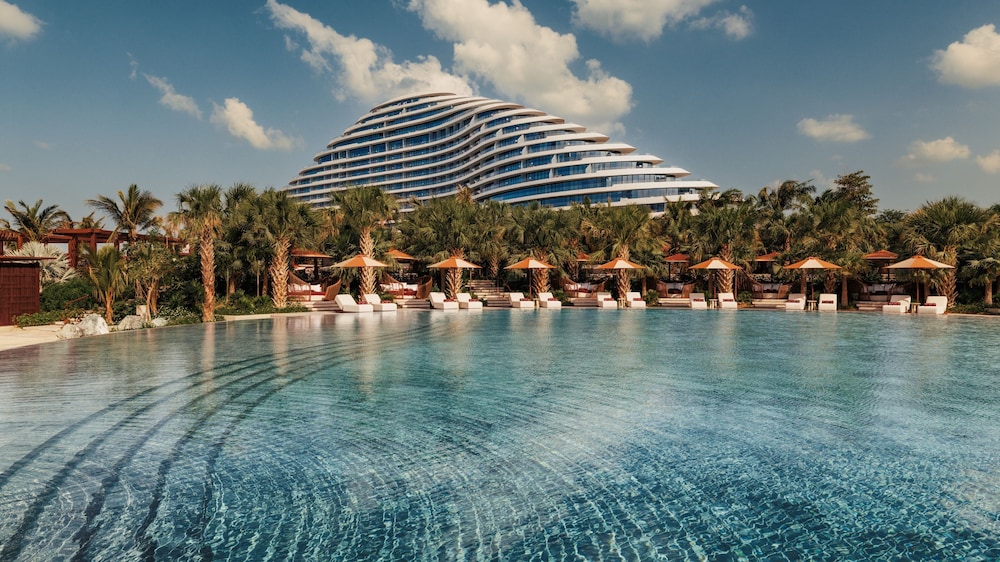
A yacht-shaped tower with a private beach, a huge spa and the best possible view of the Burj Al Arab: the one next door.
What we liked
- Brand-new hardware — everything works and nothing is tired
- Direct private beach with Burj Al Arab views
- Large spa and multiple pools, including adults-only
Worth knowing
- So new that some outlets and service rhythms are still settling
- Umm Suqeim needs a taxi for most off-property dining
- Summer heat makes June to August a different holiday entirely
The arrival and architectural statement
Jumeirah Marsa Al Arab Dubai occupies a singular piece of real estate on the Umm Suqeim coastline. Resembling a gargantuan superyacht moored alongside the iconic Burj Al Arab, the building is a sharp departure from the terracotta wind towers of the neighbouring Madinat Jumeirah. It represents the final piece of the brand's coastal trilogy, offering a clean, aerodynamic silhouette that feels contemporary without falling into the trap of sterile minimalism. The scale is undeniably grand, yet the clever tiered design ensures that the structure does not loom over the beach in a way that feels oppressive to those on the sand.
Stepping into the lobby, the atmosphere is one of high-ceilinged calm, a deliberate contrast to the humid bustle of Dubai outside. The design palette leans heavily on light woods, polished stone, and expansive glazing that draws the Arabian Gulf inside. Because the property opened in 2025, there is a distinct lack of the wear and tear often found in older luxury mainstays. The hardware is impeccable, from the silent operation of the lifts to the integrated lighting systems. It is a confident opening that positions itself as a fresh alternative to the established titans of the Jumeirah family.
The surrounding Umm Suqeim neighbourhood
Geography is the strongest card this hotel plays. Situated between the theatrical Burj Al Arab and the sprawling Madinat Jumeirah complex, guests have access to some of the most sought-after views in the United Arab Emirates. While many new Dubai hotels are relegated to the furthest reaches of the Palm Jumeirah or the dusty inland corridors of Business Bay, Marsa Al Arab sits on the mainland coast. This means shorter transit times to the airport and easier access to the residential charm of Jumeirah and Umm Suqeim, where local cafes and boutiques offer a break from the corporate malls.
Walking is rarely a primary mode of transport in Dubai, but the hotel’s position allows for a rare bit of pedestrian exploration. A fifteen-minute stroll along the shoreline or the manicured pathways leads you to the Souk Madinat Jumeirah, a curated version of a traditional market filled with bars and high-end restaurants. However, for almost anything else, a taxi or chauffeur is essential. The hotel is somewhat isolated from the metro, and while the immediate vicinity is prestigious, the infrastructure is very much built around car travel. Most off-property dining will require a short, inexpensive ride to Al Wasl Road or the financial district.
Slept in a Sea View Room
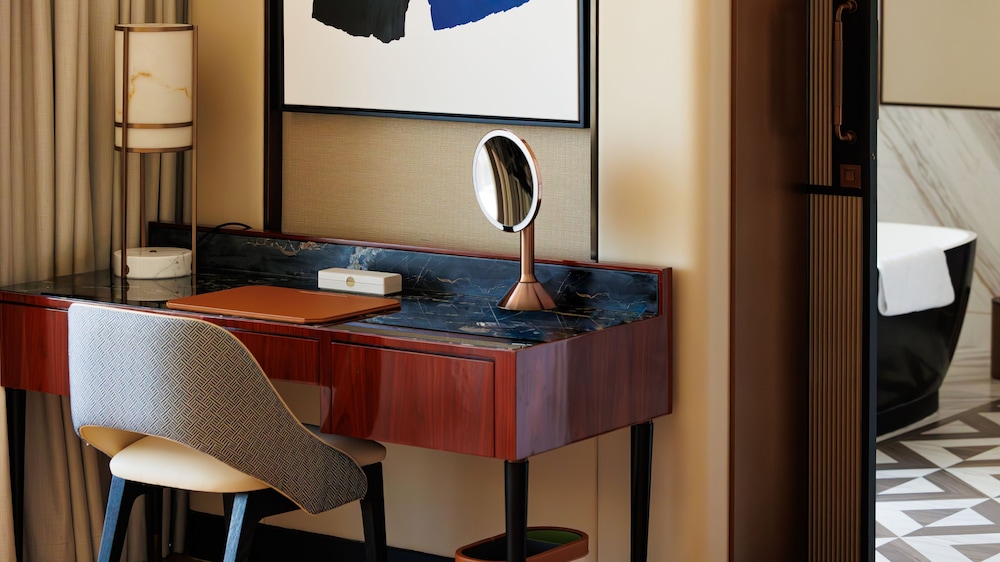
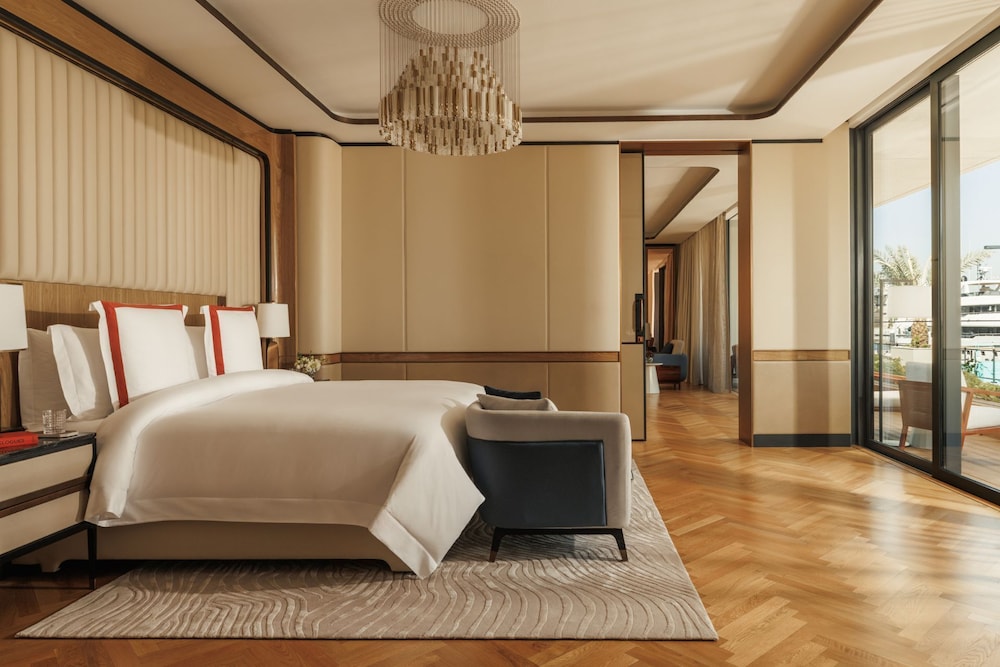
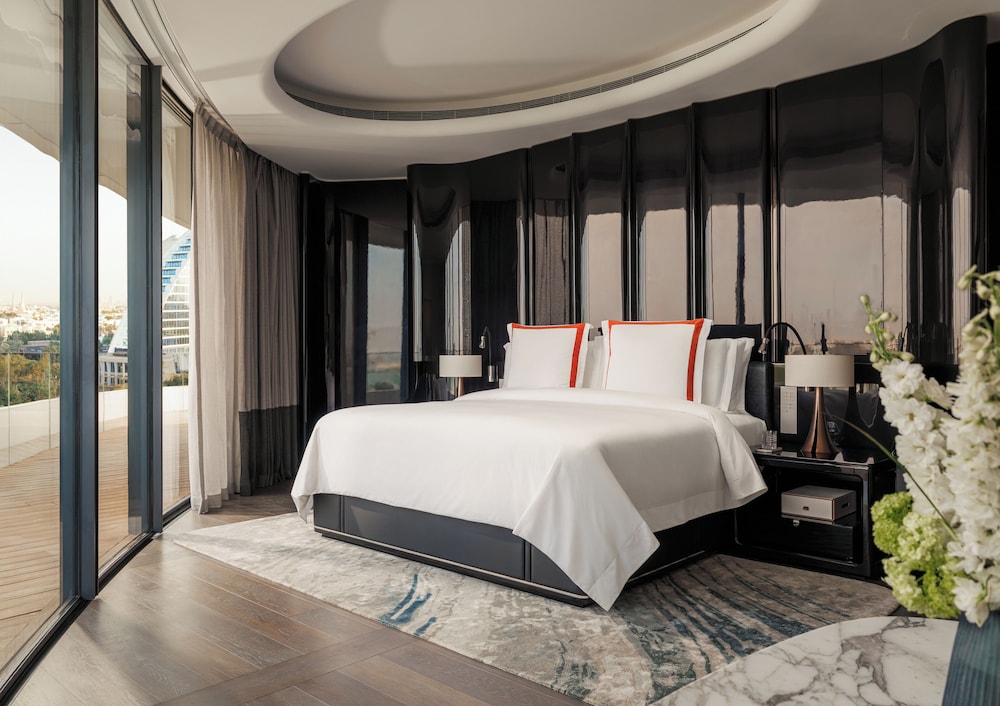
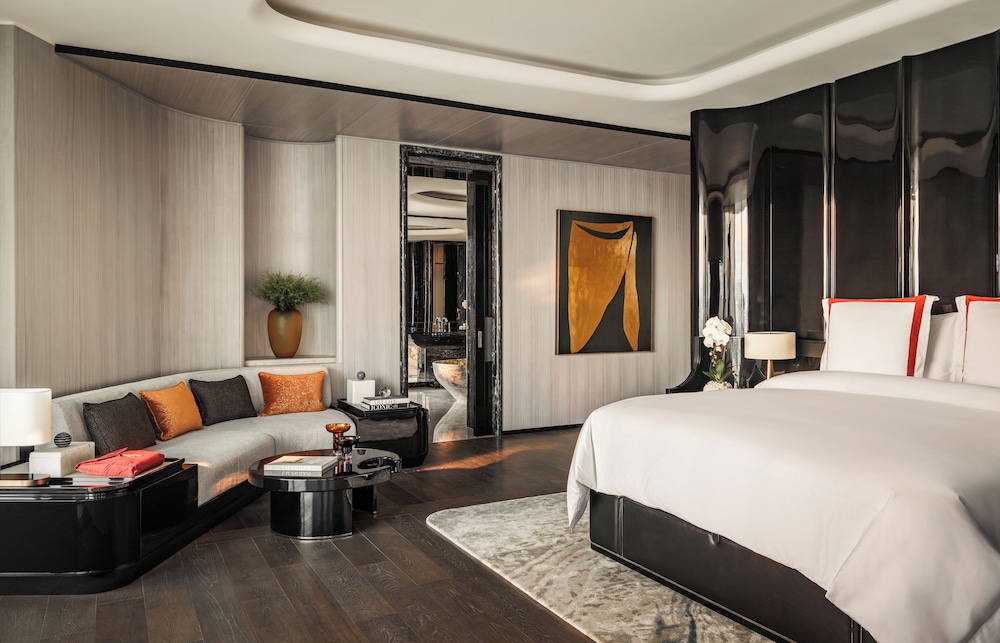
The guest rooms are generous in their proportions, designed to maximise the connection to the water. In the Sea View Room, floor-to-ceiling glass panels slide back to reveal a balcony that feels like the deck of a ship. The interiors avoid the overly ornate gold and velvet of 1990s Dubai, opting instead for a sophisticated blend of cream fabrics and warm timber. Storage is exceptionally well-planned, featuring walk-in wardrobes that prevent suitcases from cluttering the living area. Even the entry-level categories feel like junior suites elsewhere, providing a sense of space that justifies the price point.
Bathrooms are a masterclass in marble and light. Each features a deep soaking tub and a separate rain shower with intuitive controls that do not require an engineering degree to operate. The lighting is particularly noteworthy, offering multiple settings for different times of day, including a soft motion-sensor light for nighttime. It is worth noting that while city-facing rooms exist, they primarily look over busy arterial roads and ongoing construction projects. The premium for a sea view is not just a luxury here; it is an essential component of the experience, ensuring you wake up to the horizon rather than a crane.
Culinary offerings and social spaces
Dining at Marsa Al Arab is an ambitious affair, with several outlets vying for attention. The breakfast service is a sprawling buffet that covers every conceivable global craving, from Middle Eastern labneh and manakish to classic European pastries. The quality of ingredients is high, and the kitchen seems to have avoided the mass-produced feel of many large-scale hotel buffets. Throughout the day, the lobby lounge and pool bars provide lighter, well-executed plates, though the signature restaurants are where the hotel truly aims to compete with the city's established gourmet scene.
Because the hotel is a new opening, some of the dining rhythms are still finding their feet. During my stay, the service in the speciality restaurants was technically proficient but occasionally lacked the effortless flow found in older properties. That said, the outdoor terrace dining is spectacular in the cooler months, offering front-row seats to the sunset over the Gulf. If you tire of the on-site options, the proximity to the Madinat Jumeirah means you have dozens of other restaurants within a very short distance, making this one of the better locations for food enthusiasts who dislike being trapped in a single resort ecosystem.
The spa and thermal circuit
The spa is one of the most comprehensive in the Jumeirah portfolio, designed to be a destination in its own right rather than a mere hotel amenity. It features an extensive thermal circuit, including steam rooms, saunas, and vitality pools that are particularly useful during the peak summer months. When the outdoor temperature renders the beach unusable between 11:00 and 16:00, this subterranean sanctuary becomes the focal point of the hotel. The treatment rooms are quiet, well-insulated from the sounds of the resort, and the therapists are clearly highly trained in both traditional and modern techniques.
Fitness enthusiasts are equally well-catered for with a gym that looks more like a high-end private members' club than a hotel workout room. It is stocked with the latest cardiovascular and strength equipment, and the staff are on hand to offer water and towels with quiet efficiency. There is a sense that the hotel has looked at the competition and decided to over-spec every wellness facility to ensure they remain relevant for the next decade. For those who prioritize health and recovery during their travels, this is currently one of the strongest offerings in the city.
Poolside life and beach access
Water is the central theme here, with multiple pools distributed across the property to cater to different demographics. The main family pool is a lively hub, designed to keep children entertained without the noise spilling over into the quieter zones. For those seeking peace, the adults-only pool is a sophisticated enclave where the service is notably attentive, with staff providing ice water, sunblock, and occasional chilled fruit skewers throughout the day. The furniture is high-quality, with thick cushions and sturdy umbrellas that actually provide shade.
The private beach is the hotel’s crown jewel, offering a wide stretch of soft sand and remarkably clear water. The view from the sun loungers is perhaps the most famous in Dubai, looking directly at the sail-shaped Burj Al Arab. Unlike the public beaches further down the coast, this area is meticulously maintained and feels genuinely exclusive. Even when the hotel is near capacity, the beach does not feel crowded, thanks to the generous spacing of the loungers. It is an ideal spot for an early morning swim or a sunset walk, provided you are visiting during the temperate winter season.
Service and the new-build learning curve
Operating a hotel of this scale requires a massive workforce, and Jumeirah has clearly recruited heavily to ensure a high staff-to-guest ratio. The service is polite, enthusiastic, and genuinely welcoming. From the bellhops to the concierge, there is a clear desire to impress, which is common in new prestige openings. You are greeted by name frequently, and requests for additional amenities or late check-outs are handled with a degree of flexibility that is often lost in older, more rigid luxury hotels.
However, there are still minor signs that the property is settling into its operational groove. On a few occasions, drink orders at the pool took longer than expected, and the housekeeping timing was slightly inconsistent. These are not major failings but rather the expected growing pains of a massive new operation. For most guests, these small lags are easily forgiven in exchange for the pristine condition of the facilities. By the time the hotel has been open for a full year, one would expect these service rhythms to be as polished as the marble in the lobby.
Suitability for families and couples
Marsa Al Arab manages the difficult balancing act of being both a family-friendly resort and a romantic retreat. The kids' club is well-staffed and offers a genuine programme of activities rather than just a room full of screens, allowing parents to enjoy the spa or the adults-only pool with peace of mind. The family pool is large enough to accommodate splashing without it feeling chaotic. For families, the spacious rooms and the ability to interconnect various categories make it a practical choice that doesn't sacrifice the feeling of a luxury holiday.
Couples will find plenty of secluded corners, particularly in the higher-tier suites and the quieter dining outlets. The evening atmosphere is decidedly grown-up, with subtle lighting and a sophisticated cocktail culture. Because the resort is so large, the two worlds rarely collide in a way that feels disruptive. Whether you are looking for a high-energy family break or a quiet weekend of sunbathing and fine dining, the layout of the property supports both agendas equally well. It is this versatility that likely makes it a top choice for the domestic market as well as international tourists.
The verdict and value proposition
Jumeirah Marsa Al Arab is currently the strongest new-build option on the Dubai mainland coast. It offers a level of hardware and modern comfort that its older siblings nearby cannot quite match, even with their recent renovations. The pricing strategy reflects its newcomer status; while it is by no means a budget option, it is often priced slightly below the Burj Al Arab or the premium wings of the Madinat Jumeirah while it establishes its reputation. For a first-time visitor to Dubai, the combination of the beach, the Burj views, and the brand-new rooms makes it an incredibly compelling package.
Value depends entirely on the calendar. Dubai’s peak season runs from November to March, when the weather is perfect and the rates are at their highest. During this time, you are paying for the ability to spend all day outdoors. In contrast, the summer months of July and August see prices drop by as much as fifty percent. If you can handle the 40°C heat and plan your day around the indoor spa, gym, and shaded pools, the value during the low season is exceptional. For the best balance of price and climate, the shoulder months of October and April are the clever times to book.
Dubai's peak runs November to March. July and August are half the price, if you can handle 40°C and plan for indoor time.