La Mamounia review: Marrakech's most famous garden, and it earns the fame
Hivernage, Marrakech — three nights in a Deluxe Room
FlexStays Editorial · 14 February 2022 · 8 min read · Our score 9.2/10

Seventeen acres of walled gardens next to the medina, four pools and a spa the size of a small hotel. La Mamounia is spectacle done properly.
What we liked
- Historic gardens that are genuinely worth an afternoon on their own
- Walking distance to the Koutoubia and Jemaa el-Fnaa
- Enormous spa with a proper hammam circuit
Worth knowing
- Large and busy — this is not an intimate riad experience
- Non-resident visitors fill the bars and restaurants
- High season around Christmas and Easter is very expensive
The weight of history at the medina's edge
La Mamounia does not merely sit in Marrakech; it defines the city's approach to grand hospitality. Set within seventeen acres of historic walled gardens that predate the hotel by centuries, the property occupies a singular position in the Hivernage district. Originally a royal gift in the 18th century, the site evolved into a hotel in 1923, and it remains a masterclass in the spectacle of Moorish-Andalusian architecture. The scale here is significant, serving as a reminder that this is not a boutique riad experience, but a sprawling estate designed for those who appreciate the theatre of heavy zellij tiling, intricately carved plaster, and rows of lanterns that glow at dusk.
The proximity to the historic core is one of its greatest assets. You are within a five-minute walk of the Koutoubia Mosque and the chaotic, sensory overload of Jemaa el-Fnaa. However, once you pass through the security gates and the main entrance, the noise of the city vanishes completely. It is a transition that feels almost cinematic. While the hotel has undergone modern renovations, most recently in 2020 by designers Patrick Jouin and Sanjit Manku, it retains the gravitas of its past, blending the Art Deco influences of its heyday with a contemporary sheen that ensures it never feels like a dusty museum.
The most famous gardens in the Maghreb
The gardens remain the primary reason to book a stay here. They are a lush, structured labyrinth of olive groves, citrus trees, and ancient roses that provide a genuine sense of sanctuary. Long, shaded walks run alongside the city walls, offering a temperature drop that is palpable even in the peak of the afternoon sun. It is entirely possible to spend half a day wandering the grounds without seeing another guest, a rarity in a city where space is at such a high premium. The meticulous maintenance of the flora ensures that the grounds are a year-round highlight, not just a seasonal benefit.
Non-resident visitors are permitted to wander the gardens for a fee, which means the grounds can feel slightly busier during the mid-afternoon. However, for those staying on property, the early morning hours before the public arrives are a revelation. There is a specific scent here—a mixture of drying earth, orange blossom, and woodsmoke—that has become synonymous with the property. It is the kind of setting that allows for a full removal from the external world, satisfying those who want the Moroccan atmosphere without the constant navigation of the medina's narrow, sun-scorched alleyways.
Decadence and detail in the Deluxe Rooms
Accommodation at La Mamounia is divided into rooms, suites, and private riads, each following a design language of dark timber, heavy fabrics, and traditional craftsmanship. The Deluxe Rooms are the standard-bearers, providing ample square footage and a sense of quiet solidity that masks the scale of the hotel. Soundproofing is excellent, ensuring that even when the bars downstairs are busy, the sleeping quarters remain undisturbed. The bathrooms are equally impressive, featuring marble finishes and high-end amenities that lean into the luxury branding that the hotel has spent decades cultivating.
When booking, the view is the most critical factor to consider. Rooms are categorised by their orientation: Hivernage, Koutoubia, or Garden. It is highly recommended to ask specifically for a garden view. While the city-side rooms offer a glimpse into the local life of Marrakech, they are noticeably less special than those overlooking the palms and olive trees. The balconies on the garden side serve as private outdoor living rooms, perfect for a slow breakfast while watching the light change across the Atlas Mountains in the distance. Without the garden view, the experience can feel somewhat detached from the hotel's greatest strength.
A culinary circuit from Marrakech to Milan
The dining landscape here is vast and varied, catering to an international crowd with differing expectations. Le Marocain is the flagship, located in a separate pavilion within the gardens. It offers a refined take on traditional tagines and pastillas, accompanied by live music that adds to the atmosphere without being intrusive. It is the restaurant you should book for a celebratory evening, as the setting is genuinely romantic. However, for a more relaxed daily option, the poolside Italian restaurant, L’Italien par Jean-Georges, tends to be where guests spend most of their time, offering high-quality pasta and wood-fired pizzas in a bright, airy setting.
Beyond the main restaurants, the hotel’s bars are destinations in their own right. The Churchill Bar, named after the hotel's most famous former guest, is a moody, leather-clad sanctuary perfect for a late-evening drink. More recently, the addition of a tea room by Pierre Hermé has brought a touch of Parisian pastry expertise to the lobby area. One potential drawback is the influx of non-residents who come specifically to dine and drink. During peak times, the bars can feel quite crowded, and the presence of social media influencers seeking the perfect shot can occasionally detract from the gravitas that regular patrons expect.
The subterranean sanctuary and hammam
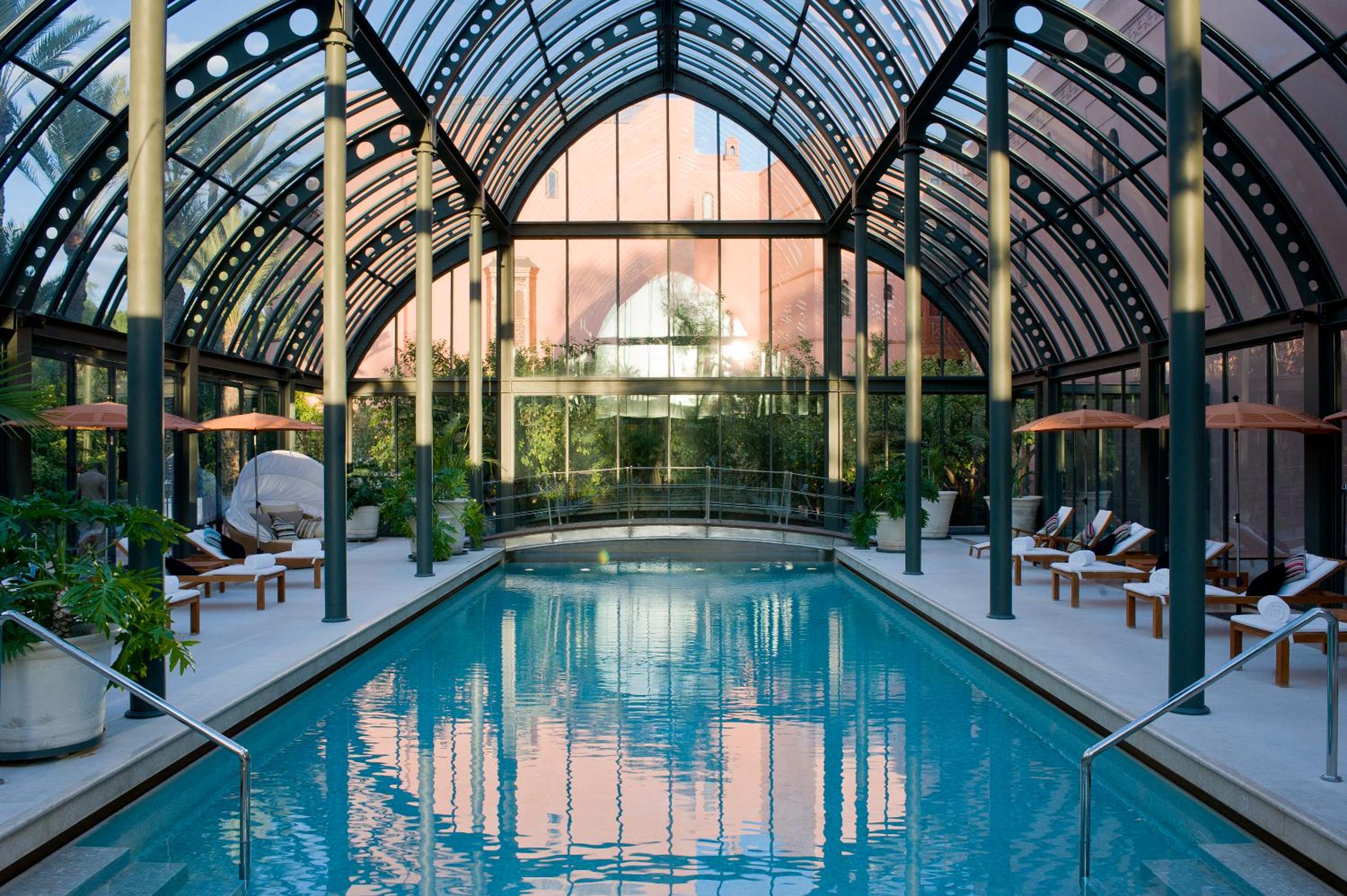
The spa at La Mamounia is an enormous undertaking, effectively the size of a small boutique hotel in its own right. It is famous for its blue-tiled indoor pool, which is perhaps one of the most photographed locations in Morocco. Beyond the aesthetics, the facility provides a comprehensive wellness circuit, including a traditional hammam that is arguably the best in the city. The ritual is vigorous and thorough, involving black soap, exfoliating mitts, and a level of heat that leaves you completely reset. It is a necessary counterpoint to the dust and heat of the city outside.
Outside, the main pool is the social heart of the hotel. It is large enough to never feel cramped, surrounded by comfortable loungers and attentive staff who appear with cold water and towels the moment you settle in. For those who prefer a more active stay, the fitness facilities and tennis courts are well-maintained, though most guests seem content to rotate between the spa and the pool. The spa treatments are expensive but justify the cost through the quality of the therapists and the sheer scale of the facilities, which easily fill a half-day of relaxation.
Service and the guest experience
Service at a property of this size is a complex operation, and for the most part, La Mamounia manages it with grace. There is a large team of uniformed staff who are exceptionally well-trained in the nuances of traditional hospitality. From the moment you arrive at the front gates, the logistics of luggage, check-in, and concierge requests are handled with a quiet efficiency. The concierge team is particularly skilled at navigating the complexities of Marrakech, whether you need a last-minute table at a busy restaurant or a guide who can navigate the deeper sections of the souks.
However, the sheer scale of the hotel means that the service can occasionally feel less personal than what you might find in a small luxury riad. During high season, when the hotel is at full occupancy, the breakfast service can become busy, and the wait for drinks by the pool might increase slightly. Despite this, the staff manage the volume well, and there is a palpable sense of pride among the employees. They are acutely aware of the hotel's history and their role in maintaining its reputation as the premiere destination in the city.
Suitability for families and couples
While La Mamounia often attracts couples seeking a romantic getaway, it is surprisingly well-equipped for families. The vast gardens provide space for children to move without disturbing other guests, and the pool areas are accommodating. The private riads, which sit away from the main building, offer three bedrooms and private pools, making them an excellent, if very expensive, option for larger groups who want the hotel’s facilities with total privacy. That said, the general atmosphere remains one of sophisticated adult leisure, and parents should be mindful of the quieter, more formal zones of the hotel.
For couples, the hotel is a definitive choice for an anniversary or a special occasion. The sense of arrival and the ability to disappear into the gardens for an afternoon provides a level of privacy that is hard to find in the medina. The bars provide a glamorous backdrop for evening drinks, and the spa is designed for shared relaxation. It is a place built for the slow pace of holiday life, where the surroundings are the main attraction and the need to leave the property becomes increasingly less urgent as the stay progresses.
The verdict on value and when to visit
La Mamounia is not a budget destination, and it does not pretend to be. During the high seasons of Christmas, New Year, and Easter, prices are at their peak and the hotel is consistently full. If you are looking for the best value, consider visiting in July or August. While the Marrakech heat is fierce during these months, the hotel’s thick walls and extensive pools make it a manageable retreat, and the rates are startlingly low compared to the winter months. Alternatively, mid-November and late January offer a sweet spot of cooler weather and more reasonable pricing before the spring rush begins.
Ultimately, if you want a stay that provides space, historic gardens, and one of the finest spas in North Africa, this hotel remains the benchmark. It is a spectacle done properly, leaning into its heritage without becoming a caricature. For those who prefer the intimate, lived-in feel of a six-room riad with a rooftop terrace, this property will feel more like a grand resort than a home. But for anyone who wants to experience the pinnacle of Moroccan hospitality on a grand scale, La Mamounia earns its fame through its unmatched grounds and its commitment to the theatre of luxury.


Cheapest in July and August when Marrakech is fiercely hot, and again in mid-November and late January.