One&Only Cape Town review: Table Mountain, an island of suites and easy logistics
V&A Waterfront, Cape Town — four nights in a Marina Rise room
FlexStays Editorial · 4 November 2024 · 8 min read · Our score 9.2/10
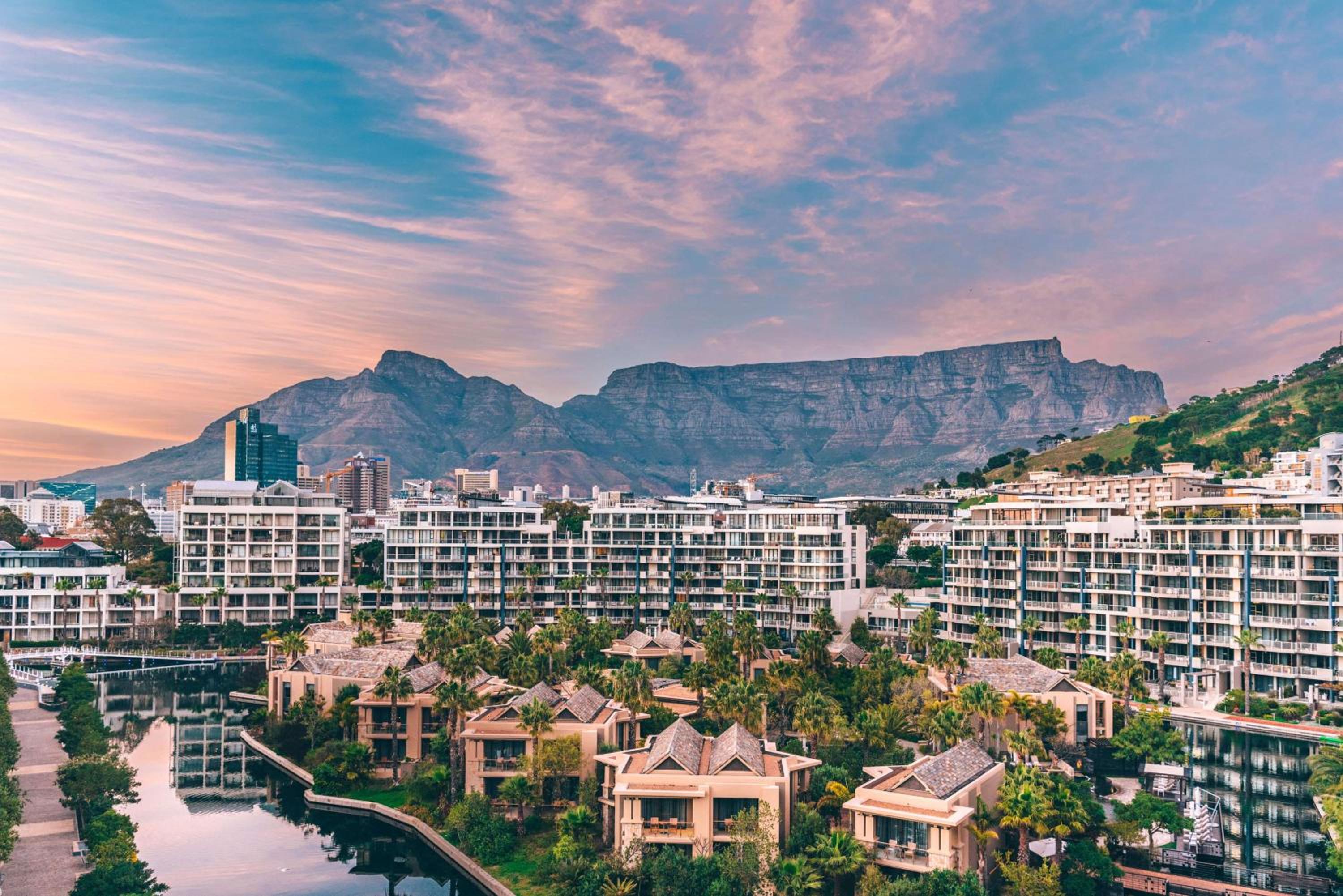
The most convenient luxury base in Cape Town: Table Mountain framed from the pool, and the Waterfront restaurants two minutes away.
What we liked
- Table Mountain views from the rooms, pool and terrace
- Walk to the V&A Waterfront, aquarium and Robben Island ferry
- Large rooms with balconies, unusual for the city centre
Worth knowing
- The Waterfront is touristy — this is not the local Cape Town
- You will need a car or driver for the winelands and the peninsula
- December and January rates roughly double
The layout and visual impact
One&Only Cape Town occupies a distinctive footprint within the Victoria and Alfred Waterfront, defined by a multi-storey crescent that arches around a private marina channel. Unlike the historic warehouses that dominate much of the harbour, this property was built with a specific cinematic intention. The architecture serves as a massive frame for Table Mountain, ensuring the flat-topped massif remains the primary decorative element from the moment you step through the glass doors of the triple-height lobby. The resort is split between the main Marina Rise building and a man-made island at its centre, creating a layered environment that feels more like a secluded resort than a city hotel.
The layout cleverly utilizes the water to create a sense of detachment from the bustling commercial district just outside the gates. Bridges connect the main hub to the island, where the spa and a cluster of low-rise suites are situated among lush landscaping. This spatial arrangement is rare for Cape Town, where most luxury hotels are either cramped boutique conversions or high-rise blocks without significant outdoor grounds. Here, the sheer scale of the communal areas, particularly the poolside terrace, allows for a level of physical breathing room that justifies the hotel's long-standing reputation as the city's premier resort-style accommodation.
Strategic position in the V&A Waterfront
Safety and ease of movement are the two most significant hurdles for visitors to Cape Town, and the hotel’s position within the V&A Waterfront precinct solves both effectively. Being situated inside this managed zone means guests can walk to the Two Oceans Aquarium, the Silo District, and the various restaurants lining the harbour without the need for a vehicle or a guide. It is an island of predictability in a city that can sometimes feel complex to navigate, particularly for first-time visitors who might be wary of walking after dark. The ferry for Robben Island is a short stroll away, making this the most efficient base for tick-box sightseeing.
However, there is a trade-off for this convenience. The Waterfront is a polished, highly commercialised version of South Africa, often catering more to international tourists than locals. If you stay exclusively within this perimeter, you miss the grit and character of the City Bowl or the creative energy of Woodstock. It is a curated experience, perfect for those who prioritise logistics and security, but perhaps too sanitised for travellers seeking the authentic, lived-in pulse of the Cape. That said, the ability to wander out for a casual dinner without calling an Uber remains a rare and valuable luxury in this part of the world.
Marina Rise rooms and island suites
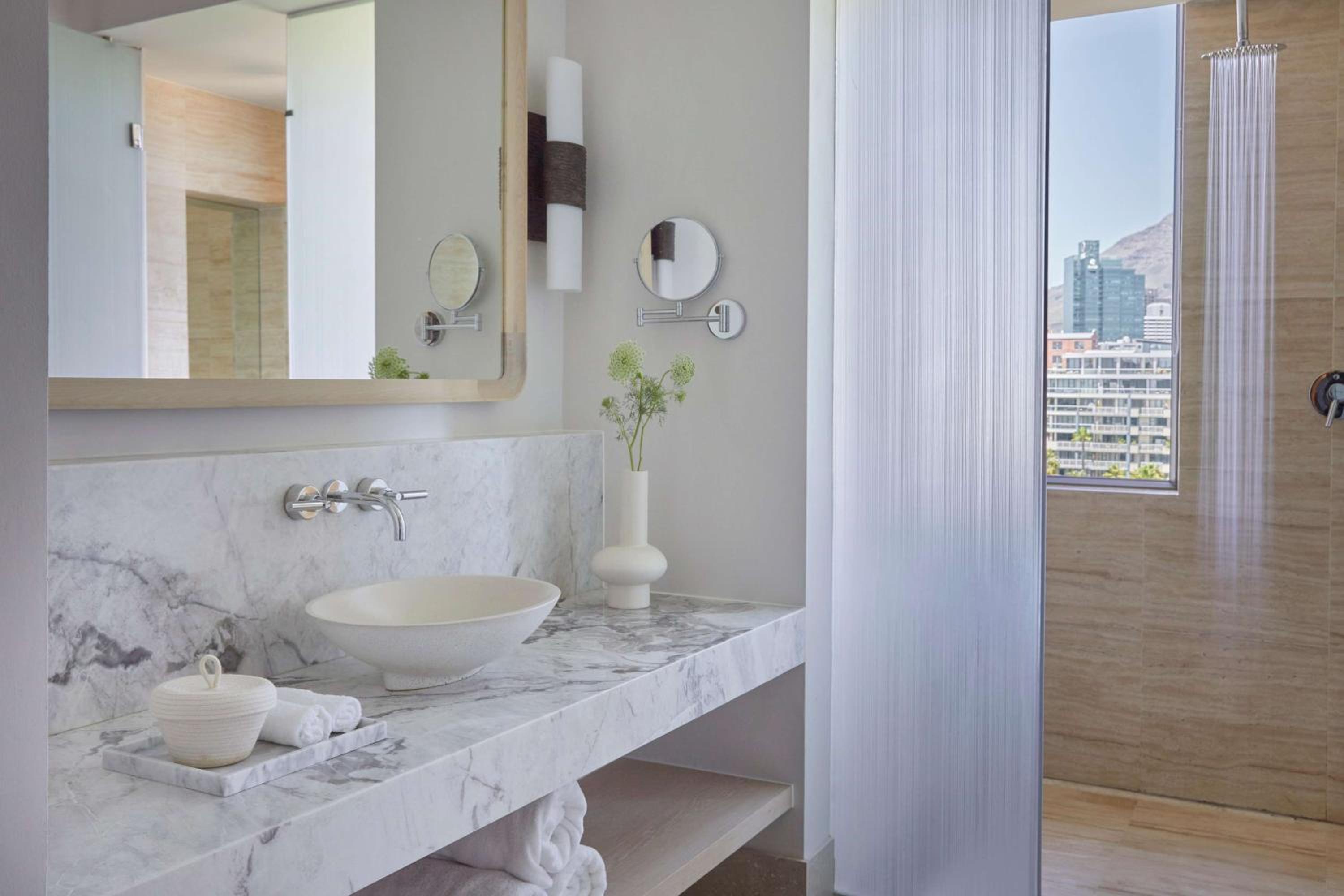
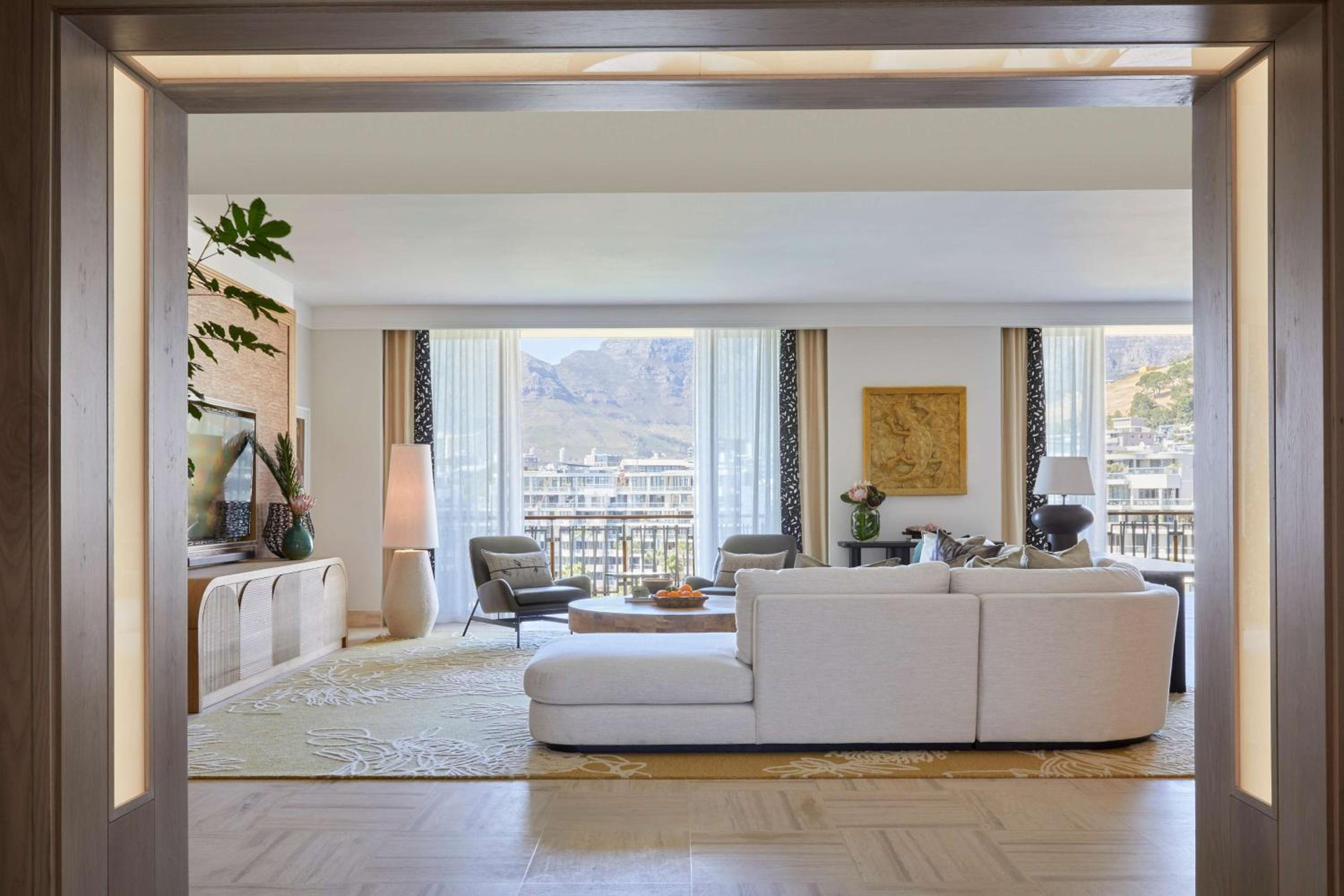
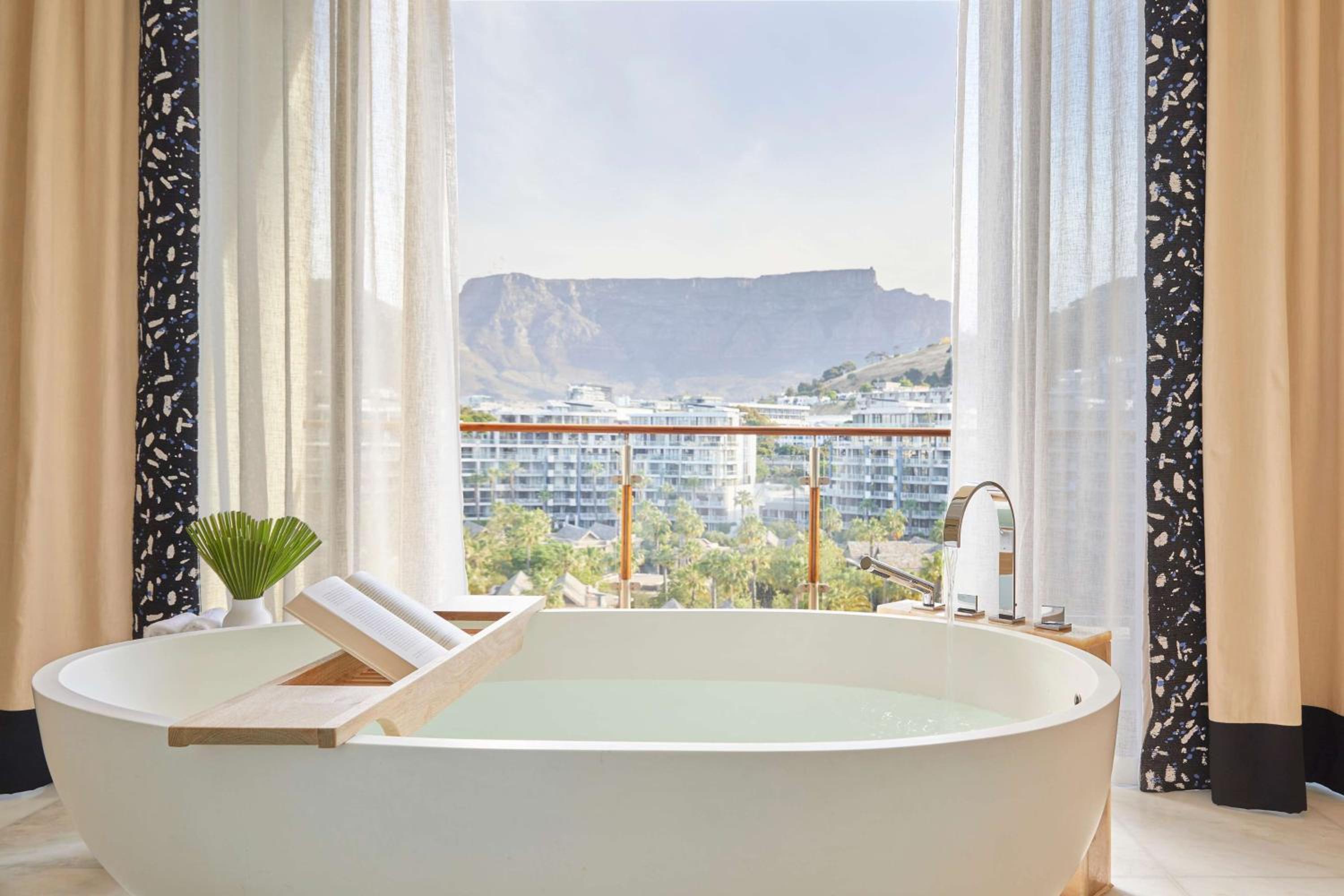
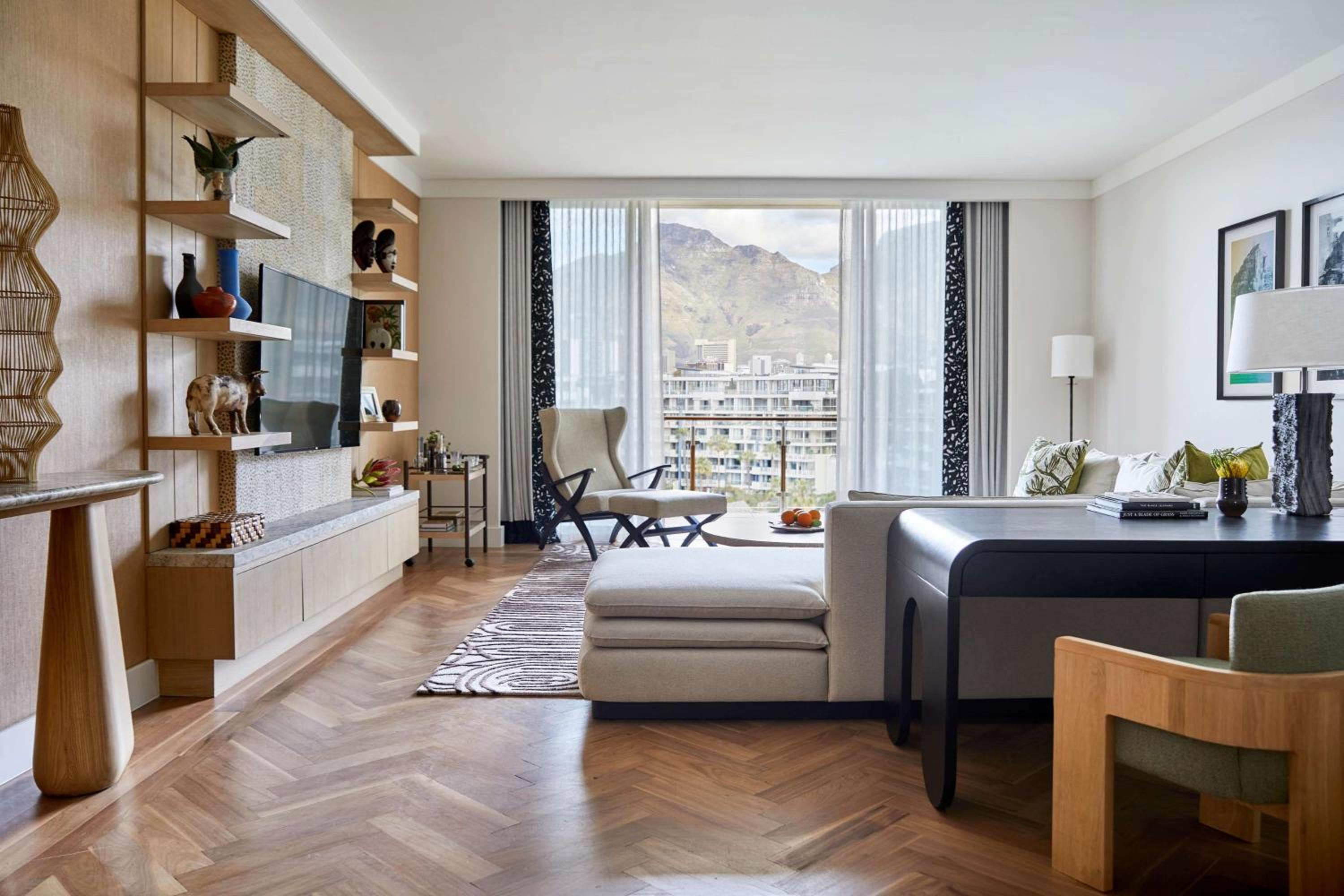
The entry-level rooms here are unusually large for a city centre, starting at approximately 60 square metres. During this four-night stay in a Marina Rise room, the primary draw was the private balcony facing directly towards the mountain. The interiors have been updated to reflect a more contemporary South African aesthetic, moving away from generic corporate luxury towards textures and artworks that feel grounded in the region. The bathrooms are vast, centred around deep freestanding tubs and finished in warm stone, providing a genuine sense of indulgence that matches the price point. The walk-in dressing areas are particularly well-designed for those staying longer than a couple of nights.
Guests choosing between the two main accommodation areas must decide between views and privacy. The Marina Rise rooms offer the iconic vista of the clouds rolling over the Cape Town skyline, which is particularly spectacular at sunrise. Conversely, the suites located on the central island offer a more secluded, garden-like atmosphere. These island rooms feel more like private villas, surrounded by water and greenery, though they lack the dramatic elevation required to see the mountain properly. For a first visit, the Marina Rise rooms are almost always the better choice, as the view is half the reason for staying here in the first place.
Dining at Reuben’s and beyond
The culinary offering is anchored by Reuben’s, the restaurant overseen by South African chef Reuben Riffel. The menu avoids the trap of being an overly formal hotel dining room, instead focusing on high-quality Cape produce handled with a mix of local and international techniques. While many hotel restaurants in the city can feel like an afterthought, the food here is consistent and sophisticated. The breakfasts are a highlight, offering an expansive spread that caters to every international palate while still providing local touches like high-quality Cape citrus and artisanal biltong for those inclined to try it.
One of the standout features is the wine list, which avoids the standard international labels in favour of a proper Cape selection. The sommeliers are knowledgeable about the nuances between the Stellenbosch, Paarl, and Swartland regions, making the bar a great place to sample top-tier South African Chenin Blancs and Pinotages. Outside of the formal restaurant, the poolside menu offers more casual fare, though it remains predictably expensive. Given the proximity to the Waterfront, you are never short of options, but the hotel manages to keep guests on-site through the sheer quality of its own kitchens.
The spa and heated pool facilities
The spa is situated on its own private island, which helps to foster an immediate sense of calm away from the main hotel buildings. It is widely considered one of the best in the country, featuring an extensive thermal suite and a range of treatments that incorporate local botanicals. The therapists are highly trained and the environment is one of absolute silence, which is a welcome contrast to the hum of the nearby harbour. Even for those not booking a treatment, the relaxation areas provide a quiet sanctuary that is rarely crowded, even when the hotel is at high occupancy.
Outside, the infinity-edge pool is the social heart of the resort. It is heated year-round, which is essential given that Cape Town’s Atlantic breeze can make unheated water bracing even in the height of summer. The service at the pool is attentive without being intrusive, with staff providing towels and water as soon as you settle onto a lounger. The framing of the mountain from the water's edge is the quintessential Cape Town photograph, and the pool deck remains one of the most pleasant places in the city to spend a clear afternoon with a book and a view.
Service standards and the driver desk
Service at One&Only is polished and follows the high standards expected of the brand globally. There is a visible presence of staff in every area, and the concierge team is particularly adept at securing last-minute bookings at the city’s more competitive restaurants. What stands out most is the efficiency of the front-of-house operations; despite the size of the hotel, the staff often remember guests by name, and housekeeping is thorough and timed to coincide with when you are out of the room. It is a level of service that feels professional and warm rather than stiff and overly rehearsed.
For excursions further afield, the hotel’s driver desk is an essential resource. While the Waterfront is walkable, reaching the Constantia winelands, the Boulders Beach penguin colony, or the dramatic cliffs of Cape Point requires a vehicle. Having a dedicated fleet of drivers who know the routes and the timing of the Cape’s notorious traffic makes these day trips significantly less stressful than trying to navigate a rental car or relying on standard ride-sharing apps for long distances. It adds to the overall sense of a low-friction holiday where the logistics are handled entirely by the property.
Suitability for different travellers
This is an excellent choice for families, which is not always the case with high-end luxury hotels in Cape Town. The KidsOnly club is well-equipped, and the safety of the Waterfront precinct makes it an easy place for parents to navigate with children. The large room sizes also mean that families can share space without feeling on top of one another. For couples, the island suites offer a romantic seclusion that feels worlds away from the city, particularly in the evenings when the bridges are lit and the noise of the Waterfront fades into the background.
For return visitors to the Cape, the appeal might be slightly different. Those who have already done the major sights often migrate towards the boutique hotels of Camps Bay for the beach access, or the historic estates of Constantia for the vineyard views. These areas often provide similar room quality at a lower price point. However, none can match the One&Only for its sheer logistical convenience. If your goal is to maximise your time and minimise the effort of getting around, this remains the gold standard, regardless of how many times you have visited the city.
Getting there and when to book
The hotel is a 20-minute drive from Cape Town International Airport, and the resort can arrange transfers that meet you right at the arrivals hall. Once at the hotel, you are positioned at the gateway to the city’s main arteries, making it easy to head south toward the peninsula or east toward the Winelands. If you are arriving by sea, the cruise terminal is virtually on the doorstep. The convenience of this location cannot be overstated for those on a tight schedule who want to see the best of the Western Cape without spending half their day in transit.
Value for money is highly dependent on the season. During the peak months of December and January, rates roughly double as the world descends on Cape Town for the summer sun. For the best balance of weather and price, the shoulder months of February to April are ideal; the wind has usually died down, and the prices are more justifiable. Alternatively, those on a budget should look at the Cape winter from May to August. While it can be rainy, the hotel is a cozy retreat, and the rates are at their lowest, making the luxury experience much more accessible to the value-conscious traveller.
Cheapest from May to August in the Cape winter; February to April gives the best combination of weather and price.