One&Only Portonovi review: the Adriatic's most ambitious resort
Boka Bay, Montenegro — reviewed over five nights in a Bay View Room
FlexStays Editorial · 21 July 2022 · 10 min read · Our score 9.1/10

A Chenot-run wellness programme, a marina full of superyachts and a fjord-like bay that most of Europe still hasn't discovered.
What we liked
- Chenot Espace — one of the most serious medical-wellness spas in Europe
- Every room has a sea view and a terrace
- Excellent for families: kids' club, free bikes, calm swimming water
Worth knowing
- Beach is a constructed platform, not sand
- Closed or reduced service outside the summer season
- Dining is resort-priced with limited walkable alternatives
The drama of the Kotor archipelago
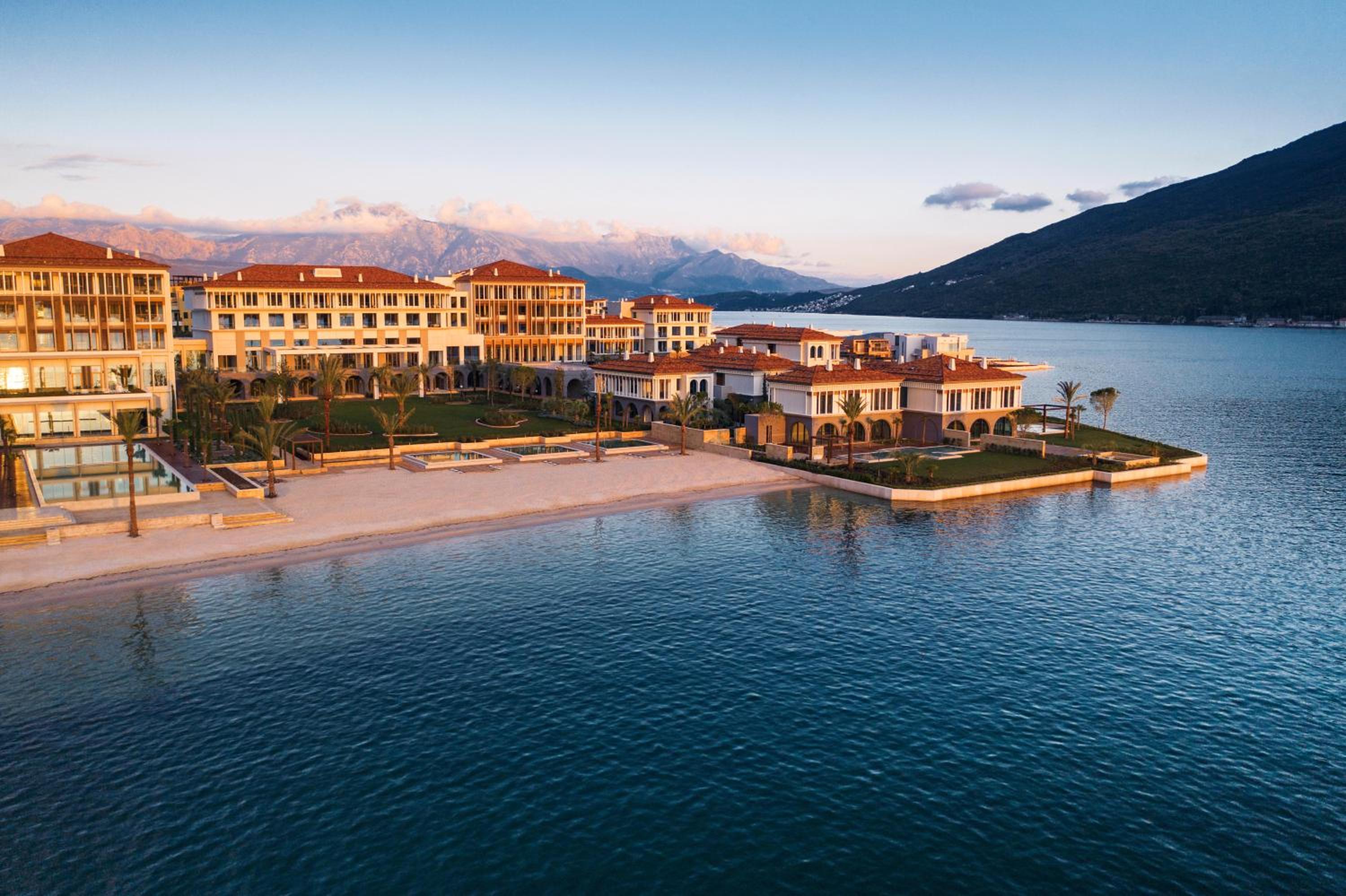
Boka Bay is the closest thing the Mediterranean has to a fjord, and Portonovi sits at its mouth, so the resort looks down a long channel of dark green mountains dropping into flat water. The setting is fundamentally different from the open-horizon panoramas of the Amalfi Coast or the low-slung scrub of the Cyclades. Here, the landscape feels intimate and protective, with steep limestone peaks reflecting in the glass-like Adriatic. The resort occupies a prime position where the bay meets the open sea, ensuring that while the water remains calm, there is a constant sense of movement from the yachts navigating the narrow strait.
The marina next door is full of large boats and a handful of restaurants, which gives you somewhere to walk in the evening—something most resorts of this type lack. Typically, high-end retreats in this region are isolated fortresses, but the integration with Portonovi Marina allows for a more varied itinerary. You can stroll past the superyachts to find a local gelato or a glass of Vranac at a harbour-side bar. Tivat airport is 20 minutes away, which is the real unlock: you can be on a lounger two hours after landing, avoiding the arduous mountain passes that once defined Montenegrin travel.
For those looking to explore further afield, the location serves as a strategic base. The UNESCO-protected town of Kotor is 40 minutes around the bay, offering medieval architecture and a labyrinth of stone streets. Dubrovnik is about 90 minutes away, though this is heavily dependent on the border crossing, which can be unpredictable in the height of summer. Most guests find little reason to leave the immediate vicinity, given the dramatic backdrop of the Orjen mountain range providing a constant, shifting theatre of light and shadow throughout the day.
Architectural restraint and water views
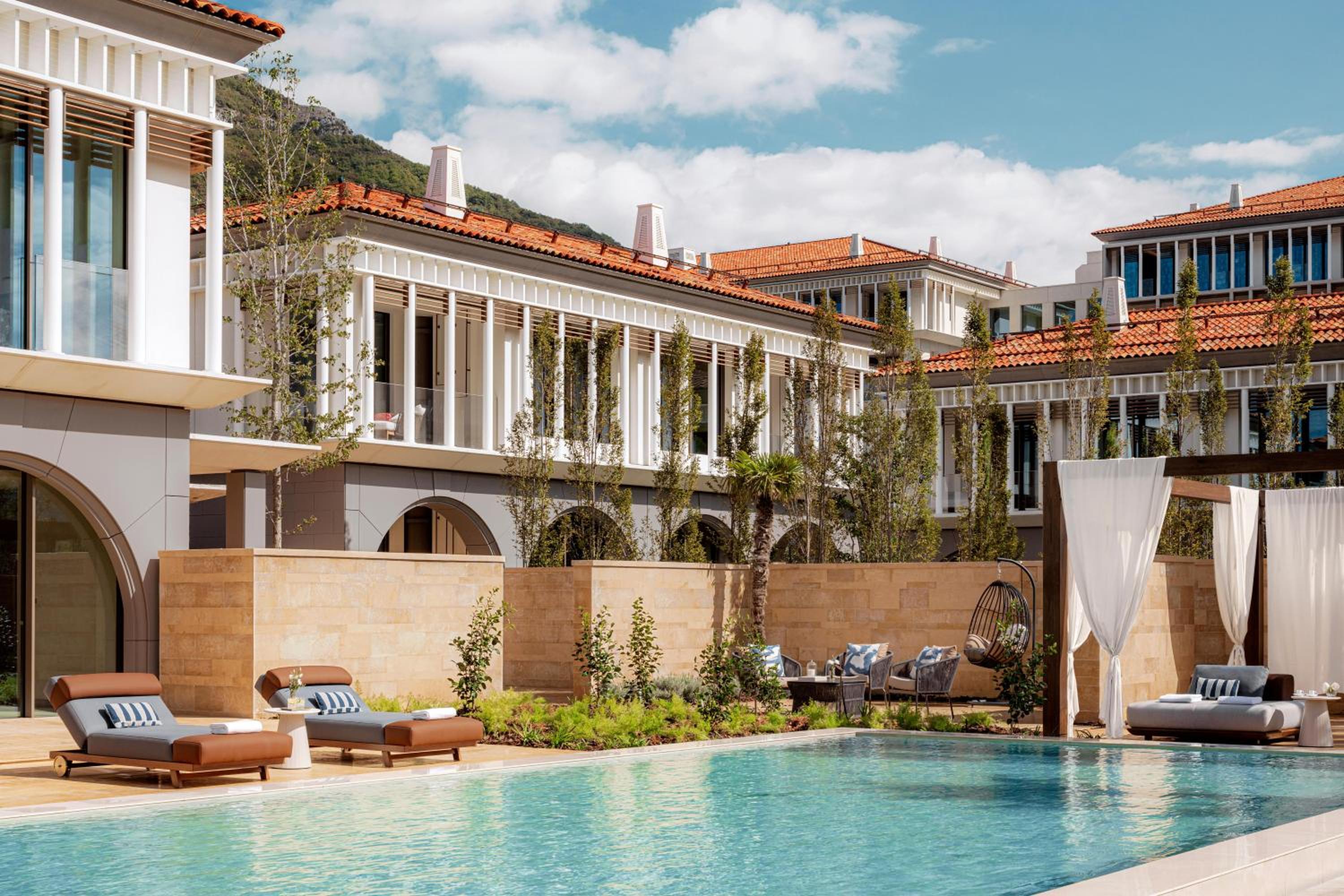
All 123 rooms and suites face the water with a private terrace, so there is no bad category. This democratic approach to design means that even the entry-level rooms benefit from the resort's primary asset: the view. The interiors are a masterclass in pale stone, linen, and timber—restrained, Mediterranean, and intentionally cool in the heat of August. The colour palette avoids the typical nautical clichés, opting instead for sandy neutrals and soft greys that do not compete with the vibrant blues and greens visible through the floor-to-ceiling windows.
The layout of the rooms is generous, feeling more like a coastal apartment than a standard hotel footprint. Bathrooms are large, with proper twin basins and separate tubs from the mid categories up, often positioned to allow a view of the bay while soaking. The lighting is intuitive, and the acoustics are impressive; despite the resort’s scale, there is a profound sense of quiet within the living spaces. The integration of local stone textures against sleek, modern joinery gives the rooms a sense of place that feels grounded rather than generic.
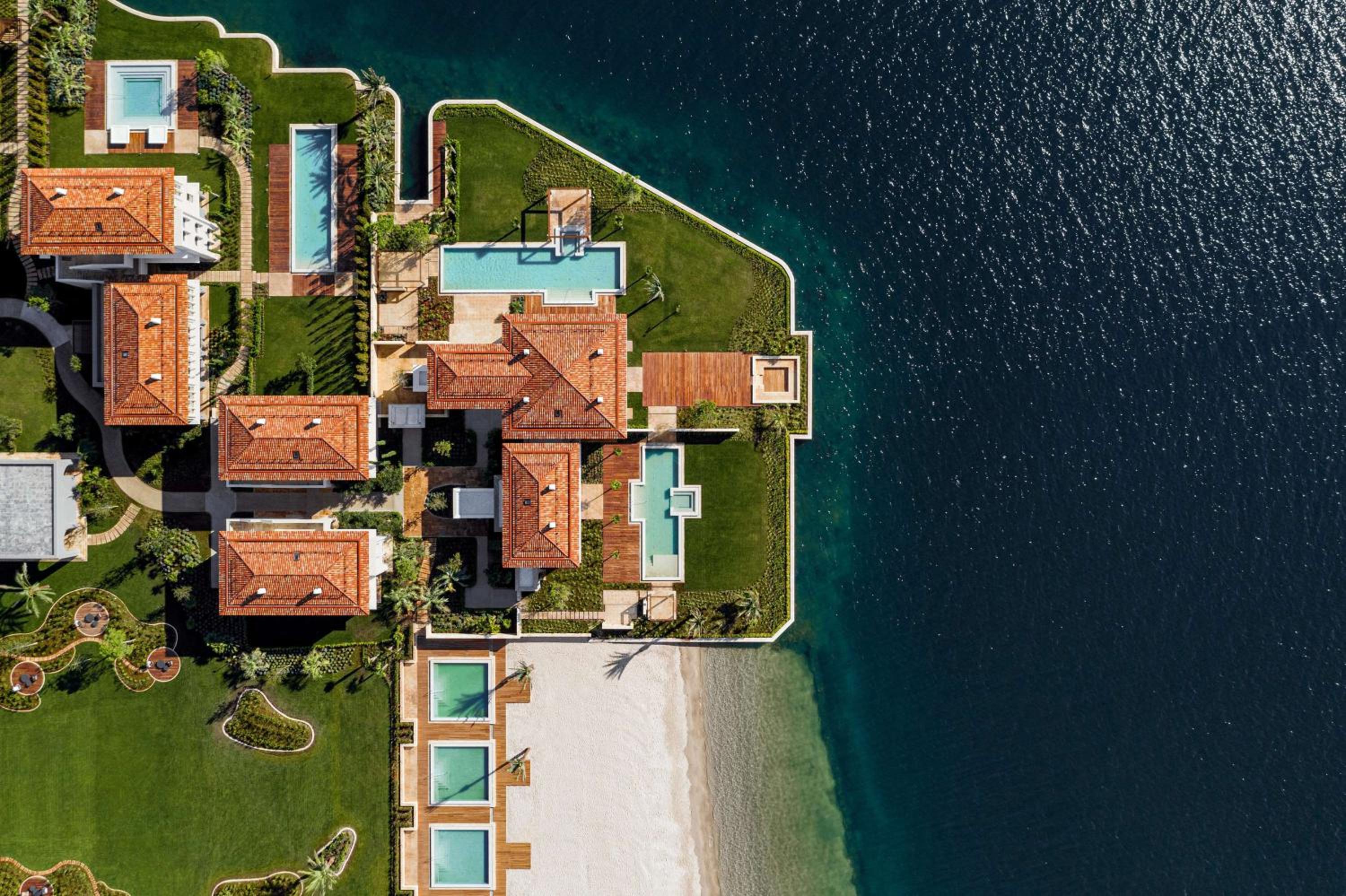
Families should look at the villas: they come with private pools and enough separation between rooms that a small child's bedtime doesn't end the adults' evening. These larger units are positioned closer to the shoreline and offer a higher degree of seclusion, with private gardens and direct access to the promenade. For couples, the standard Bay View rooms are more than sufficient, offering deep terraces with daybeds that function as an outdoor living room for most of the stay. The attention to detail extends to the smallest fixtures, from the weight of the linen robes to the quality of the soundproofing.
The Chenot Espace medical wellness programme
The Chenot Espace is the headline. It runs structured multi-day programmes—detox, recovery, weight management—with diagnostics, hydro treatments and a restrictive diet, alongside conventional spa treatments for guests who just want a massage. This is one of the most serious medical-wellness facilities in Europe, moving far beyond the standard hotel spa offering. The facility spans two floors and includes high-tech diagnostic rooms where doctors assess everything from vascular age to nutritional deficiencies before prescribing a rigorous daily schedule of treatments.
It is not a soft-focus hotel spa. If you commit to a programme, plan for a quieter stay: the food plan and treatment schedule take over the day. The diet is famously sparse but scientifically calibrated, served in a dedicated area to ensure you are not tempted by the pasta being served elsewhere. However, for those not on a mission to overhaul their metabolism, the spa remains a sanctuary. The indoor pool is an architectural marvel, framed by massive columns and floor-to-ceiling glass that looks out over the Adriatic, providing a serene environment for morning laps.
The contrast between the clinical precision of the Chenot wing and the hedonism of the rest of the resort is handled with surprising grace. You can spend your morning undergoing bio-energetic screenings and your afternoon sipping chilled white wine by the outdoor pool. If you do not wish to participate in a formal programme, ignore it and use the pools and the gym, which are excellent regardless. The fitness centre is equipped with the latest Technogym kit and staffed by trainers who actually know how to use it, rather than just handing out towels.
Dining from Sabia to Tapasake
Dining is resort-priced with limited walkable alternatives, but the quality generally justifies the expense. Sabia is the flagship Italian restaurant, where the focus is on raw seafood and handmade pasta. The setting is elegant yet relaxed, taking advantage of the sea breeze. In contrast, Tapasake offers a high-energy beach club atmosphere with a Japanese-inspired menu. It is here that the resort feels most contemporary, with a resident DJ and a cocktail list that leans heavily on sake and yuzu, catering to a crowd that values a vibrant scene as much as the food.
Breakfast is a sprawling affair, moving from local Montenegrin mountain ham and cheeses to sophisticated à la carte options like truffle scrambled eggs. The service at breakfast is particularly sharp, with staff remembering coffee preferences by the second morning. For those looking for a more casual experience, the pool bar serves surprisingly good salads and grilled fish, though the prices remain firmly in the luxury bracket. It is worth noting that while the marina offers a few external dining options, they are largely geared towards the same demographic, so do not expect a dramatic price drop.
One of the highlights is the emphasis on local ingredients, particularly the olive oil and honey sourced from the surrounding hills. Even in the more international menus, there is a subtle nod to the region’s agricultural heritage. The wine list is equally impressive, featuring a strong selection of Balkan vintages that many guests will be discovering for the first time. For those on the Chenot diet, the 'Biolight' menu is available, proving that calorie-restricted dining does not have to be entirely joyless, even if it lacks the decadence of the main menus.
Leisure facilities and the beach challenge
The resort’s primary weakness is the beach—a stone and platform arrangement rather than sand. For those used to the soft dunes of the Caribbean or even the pebbles of the French Riviera, this may be a disappointment. The beach is a constructed platform, not sand, though the resort has done an admirable job of layering it with comfortable loungers and providing easy ladder access into the water. The bay itself offers calm swimming water, free from the heavy swells of the open sea, making it ideal for long, uninterrupted swims or paddleboarding.
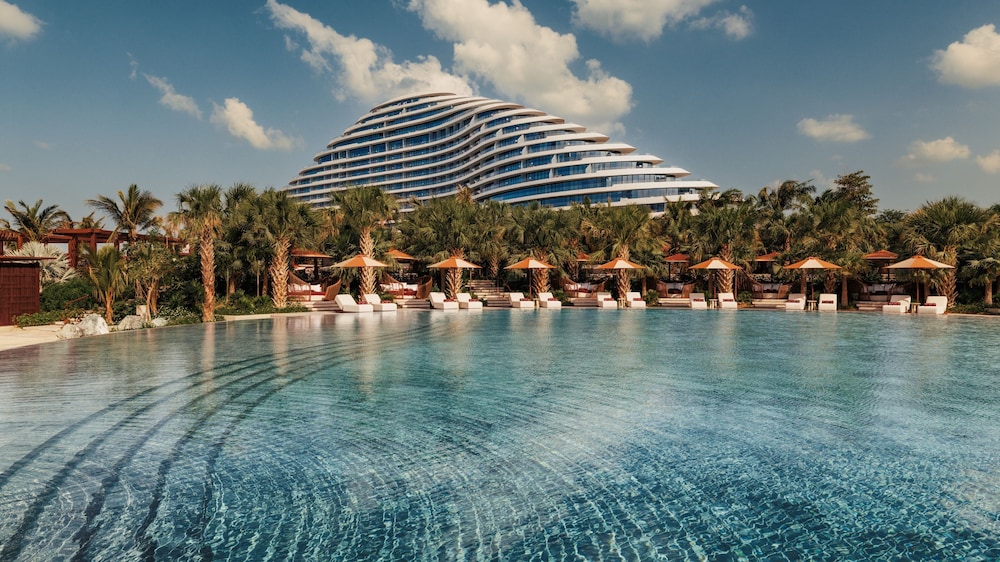
Beyond the shoreline, the resort is excellent for families. There is a well-managed kids' club that avoids the usual brightly-coloured plastic tropes, focusing instead on activities that engage with the local environment. Free bikes are available for guests to roam the wider Portonovi estate, which is largely pedestrianised and safe for children to explore. The multiple outdoor pools cater to different moods, from a family-friendly central pool to quieter corners where adults can read in relative peace. The landscaping is still maturing, but it already provides a sense of lushness that softens the modern architecture.
Service throughout the leisure areas is attentive without being stifling. Attendants appear with iced water and sun cream the moment you settle onto a lounger, and the towel service is efficient. The water sports centre is well-equipped, offering everything from sailing to high-speed boat charters for exploring the Blue Grotto or the Lady of the Rocks island. While the lack of a natural sandy beach is a factual downside, the clarity of the water and the sheer quality of the poolside infrastructure go a long way towards compensating for it.
Service standards in a new frontier
Montenegro is a country that mostly does not have genuine five-star resorts, and One&Only is the first to bring a truly international level of service to the mainland. The staff are a mix of local talent and seasoned professionals from across the globe, resulting in a service culture that is warm but highly polished. There is an evident pride among the Montenegrin staff in showing off their country, which translates into genuine recommendations and a lack of the scripted formality that can plague luxury hotels in more established markets.
Management is highly visible, ensuring that the small frictions of resort life are smoothed over quickly. Whether it is arranging a complex border crossing into Croatia or tracking down a specific vintage of wine, the concierge team is exceptionally capable. Housekeeping is meticulous, with turndown service that includes small local gifts and weather forecasts for the following day. This level of attention is what justifies the price point and distinguishes the property from the smaller boutique hotels scattered around the bay.
However, it is worth noting that during the shoulder season, the resort can feel a little quiet, and the energy levels of the staff may dip accordingly. Conversely, in the height of summer, the sheer volume of guests can put pressure on the poolside service. Overall, the resort maintains a high standard that sets a new benchmark for the region. The team handles the complexities of a large-scale operation with a level of finesse that suggests a much older, more established institution.
The verdict on value and timing
Portonovi is a genuine five-star resort, and the price sits below the equivalent in Italy, France or Greece. You are getting the same level of luxury and hardware as you would on the Côte d'Azur, but for about thirty percent less. However, the pricing curve is steep and seasonal. Peak is July and August, when the resort is at its busiest and most expensive. For those who want the full Mediterranean experience without the crowds, late May, June and September deliver the same weather at meaningfully lower rates.
If you shift a July booking to the second week of September, you can save a third for the same water temperature and arguably better service as the mid-summer rush subsides. Potential guests should be aware of the closed or reduced service outside the summer season; this is not a year-round destination in the way that Dubai or Marrakech might be. From late October through to April, the Adriatic coast can be damp and many of the resort's outdoor features are scaled back, making a winter visit a much more muted affair.
Ultimately, if sand is non-negotiable, look elsewhere. But for anyone else, this is the most ambitious and successful resort in the Balkans. It offers a sophisticated blend of medical wellness, high-end dining, and spectacular natural beauty. Montenegro is no longer just a day trip from Dubrovnik; with the arrival of Portonovi, it has become a primary destination in its own right. For the modern traveller seeking something beyond the well-trodden paths of Western Europe, it represents an compelling, high-value alternative.
Peak is July and August. Late May, June and September deliver the same weather at meaningfully lower rates.