The Ritz-Carlton Kyoto review: riverside rooms and the best onsen in the city
Kamogawa riverside, Kyoto — three nights in a River View Room
FlexStays Editorial · 12 November 2023 · 8 min read · Our score 9.3/10
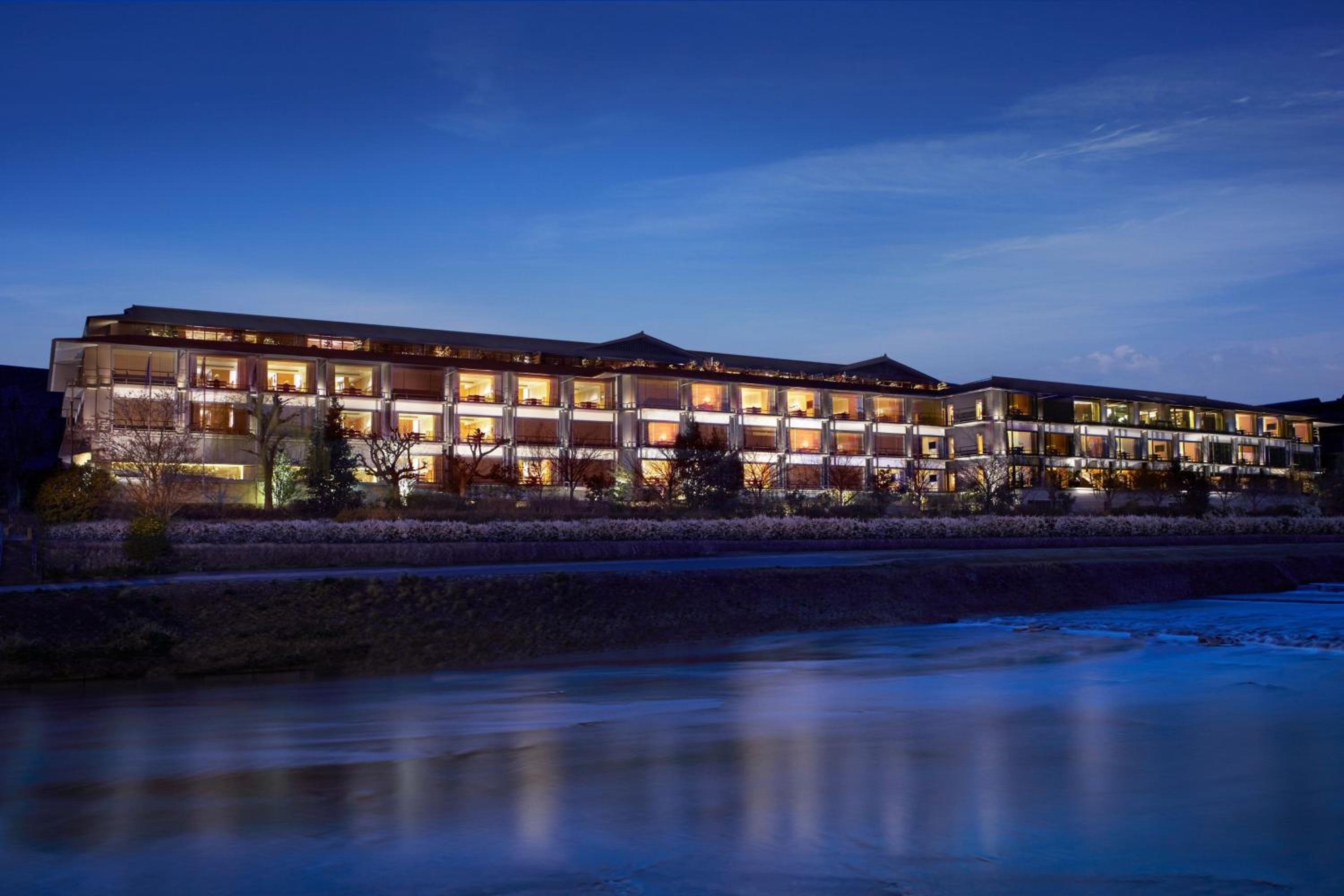
Set on the Kamo river between the Imperial Palace and Gion, with a genuine onsen downstairs and Higashiyama across the water.
What we liked
- River-facing rooms look straight at the Higashiyama mountains
- Onsen-style baths and a 20-metre pool in the basement
- Walkable to Gion, Pontocho and the Imperial Palace grounds
Worth knowing
- City-view rooms are much less compelling for a modest saving
- Cherry blossom and autumn colour weeks are priced brutally
- Breakfast is expensive if not included
The Kamo Riverbank and Nijo-Ohashi position
The Ritz-Carlton Kyoto occupies a privileged strip of real estate on the western bank of the Kamo River, situated precisely at the junction of Nijo-dori and the water. This location offers a rare duality in a city as dense as Kyoto: immediate proximity to the historical core and a sense of open, airy distance. The building itself is a masterpiece of modern low-rise architecture, designed to adhere to the city's stringent height regulations while paying homage to the traditional Meiji-era aesthetics. The entrance is artfully recessed from the main road, using a series of stepped water features and manicured greenery to create a buffer that effectively silences the hum of traffic before you even reach the heavy wooden doors.
From the lobby, one steps directly onto the riverbank path, a popular route for local joggers and cyclists that leads straight into the heart of the city's seasonal rhythms. A fifteen-minute walk south brings you to the edge of Gion, the celebrated geiko district, while a similar stroll westward leads to the sprawling grounds of the Kyoto Imperial Palace. The Nishiki Market is equally accessible on foot, making this an ideal base for those who prefer to explore Kyoto by walking rather than relying on the city's somewhat fragmented bus and subway network. It is the kind of location that encourages you to leave the taxi behind and engage with the city at street level.
Craftsmanship and design in the River View rooms
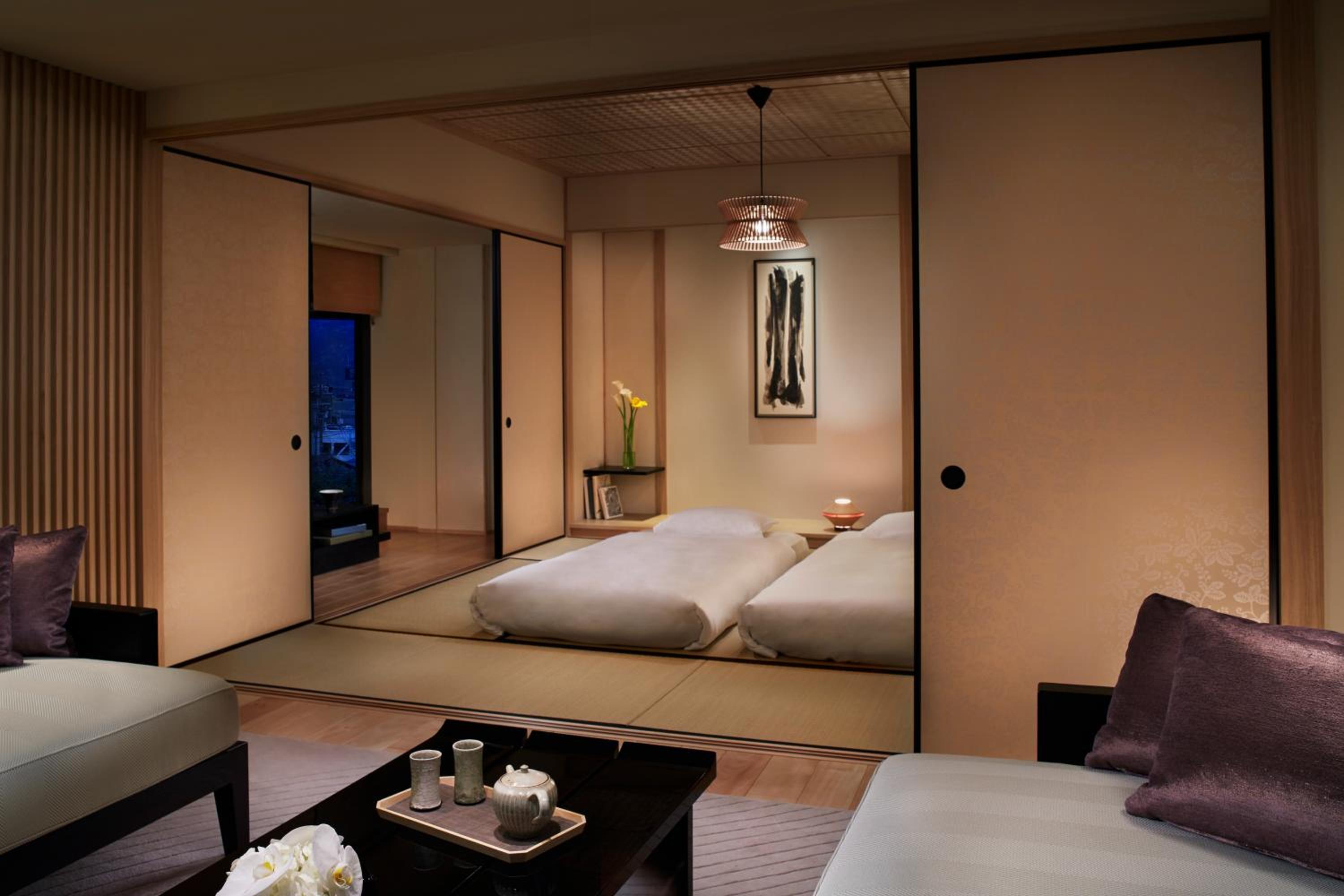
The guest rooms are among the most generous in Japan, where space is traditionally a luxury in itself. We stayed in a River View Room, which is the category most guests should aim for to truly appreciate the site. These rooms feature floor-to-ceiling windows that look directly east across the Kamo River toward the Higashiyama mountains. The design language is a sophisticated blend of contemporary comfort and traditional Japanese craftsmanship, utilising shoji-style screens to partition the space and rich, tactile materials like dark wood and textured wall coverings. The beds are lowered but not quite at floor level, striking a balance between the aesthetic of a ryokan and the expectations of an international five-star hotel.
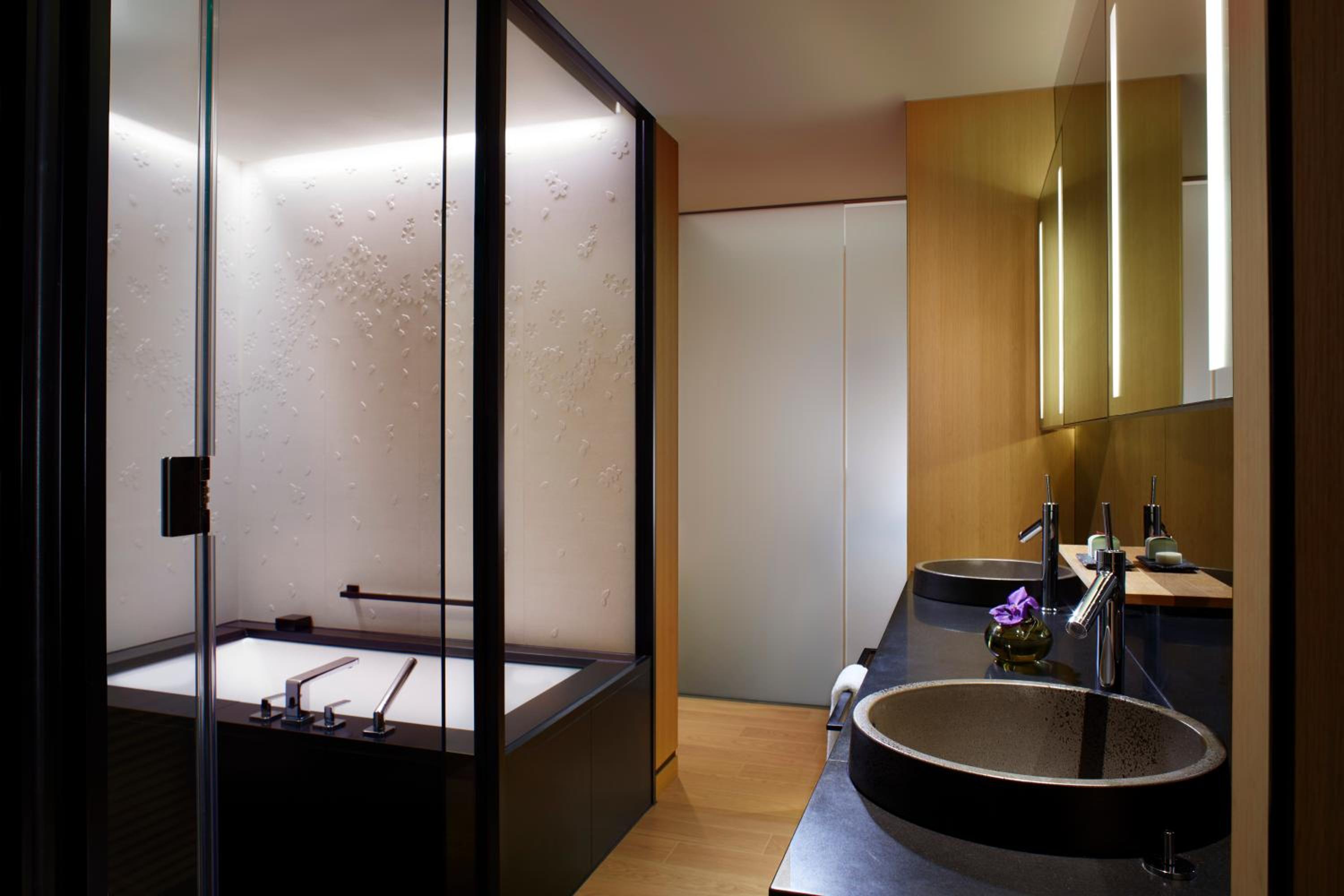
The bathrooms are a particular highlight, functioning as private sanctuaries within the suite. Each is equipped with a deep soaking tub and a separate rainfall shower area lined with cedar wood or stone, designed to mimic the ritual of a Japanese bath house. The attention to detail extends to the smallest fixtures, from the automated lighting that responds to the sliding of the shoji screens to the curated minibar stocked with local crafts and snacks. While the city-view rooms offer the same level of interior finish, they lack the expansive horizon and the morning light reflecting off the water, making them feel significantly less integrated into the Kyoto landscape for only a modest saving in price.
A masterclass in basement wellness and the onsen
In a city known for its historic public baths, the wellness facility at the Ritz-Carlton is an extraordinary achievement for a modern hotel. Located in the basement to ensure total privacy and a hushed atmosphere, the space revolves around a twenty-metre indoor lap pool that is illuminated by soft, ambient lighting. It is arguably the finest pool in the city, providing a genuine sense of escape after a day spent navigating the crowded temples of Arashiyama or Kinkaku-ji. Adjacent to the pool are the dry saunas and steam rooms, all maintained with the clinical precision one expects from high-end Japanese hospitality.
The real draw, however, is the genuine onsen-style bath house. While many urban hotels claim to offer a spa experience, this facility provides a true immersion in Japanese bathing culture, featuring hot mineral baths and cold plunges in a setting of dark slate and granite. The transition from the busy streets of Nijo-Ohashi to this subterranean temple of quietude is profound. It is the perfect antidote to the physical toll of a ten-mile walking day, and guests are encouraged to make use of the facility both early in the morning and late at night when the atmosphere is at its most contemplative.
Refined dining at Mizuki and the Pierre Herme connection
Dining here is an exercise in choice, with the signature restaurant Mizuki divided into four distinct disciplines: sushi, tempura, teppanyaki, and kaiseki. Each section has its own dedicated counter or room, allowing for a specialised experience regardless of your culinary preference. While the tempura is light and expertly executed, the kaiseki is the one to plan for. It is a multi-course journey through the seasons, utilizing local Kyoto vegetables and fresh seafood delivered daily from the coast. The presentation is as much an art form as the cooking, with each dish served on ceramics that reflect the current month's natural themes.
Breakfast is an elaborate affair, though guests should be aware it carries a premium price tag if not included in the room rate. You can choose between a lavish international buffet featuring pastries from the onsite Pierre Herme Paris boutique or a traditional Japanese breakfast set. The latter is highly recommended for its complexity, featuring grilled fish, miso soup, and various small vegetable dishes. The presence of Pierre Herme throughout the hotel adds a distinctly French flair to the afternoon tea service and the dessert menus, creating a unique cross-cultural partnership that works surprisingly well within the context of Kyoto's refined palate.
Service culture and the art of the concierge
The service at the Ritz-Carlton Kyoto is characterised by a level of formal grace that is increasingly rare even in luxury circles. From the moment you arrive, the staff manage the logistics of check-in and luggage with an invisible efficiency. There is a genuine sense of omotenashi, the Japanese philosophy of wholehearted hospitality, which manifests in small gestures like providing walking maps with hand-drawn annotations or ensuring your preferred tea is replenished in the room. The concierge desk is particularly adept at securing reservations at the city's notoriously difficult-to-book traditional restaurants, a service that is invaluable for first-time visitors.
During our three-night stay, the staff demonstrated an impressive ability to anticipate needs without being intrusive. Whether it was coordinating a private guide for a tour of the Daitoku-ji temple complex or arranging for a late-night transport to Kyoto Station, the execution was flawless. This level of service is what separates the property from the more corporate luxury hotels in the city; there is a warmth here that feels personal. For families, the hotel offers specific activities like origami workshops or scavenger hunts, ensuring that younger guests are engaged with the local culture rather than just being accommodated.
Exploring the Higashiyama and Pontocho neighbourhoods
The hotel serves as a gateway to some of Kyoto's most atmospheric districts. By crossing the Nijo bridge, you are immediately positioned to explore the northern reaches of Higashiyama, home to the Nanzen-ji temple and the Philosopher's Path. The walk along the Kamo River is especially beautiful during the early morning hours when the light hits the mountains and the herons are fishing in the shallows. It provides a peaceful alternative to the main thoroughfares, allowing you to reach the southern attractions of Kiyomizu-dera while avoiding the bulk of the tourist traffic.
In the evenings, the location becomes even more advantageous as the Pontocho alley comes to life. A ten-minute walk south along the river leads to this narrow pedestrian street lined with traditional wooden buildings housing everything from tiny yakitori stalls to high-end ryotei. The proximity of the hotel means you can enjoy the nightlife and the vibrant dining scene of central Kyoto without the need for a long commute back to your room. This connection to the living, breathing heart of the city is what makes the Ritz-Carlton's position on the riverbank so strategically superior to the hotels located further out in the hills.
Seasonal considerations and the cost of the view
Timing is everything when booking a stay in Kyoto, as the city's appeal is heavily dictated by the lunar and floral calendars. The most sought-after periods are undoubtedly the first two weeks of April for the cherry blossoms and the entirety of November for the autumn maple leaves. During these weeks, the hotel operates at full capacity and prices are adjusted accordingly, often doubling or tripling compared to the low season. While seeing the Higashiyama mountains draped in pink or crimson from your bedroom window is a bucket-list experience, it requires a significant financial commitment and booking many months in advance.
For those seeking better value without sacrificing the quality of the experience, the cheapest weeks to visit are mid-January to late February and the humid weeks of mid-June. Kyoto in the winter has a quiet, stark beauty, and the hotel's onsen facilities become even more enticing when there is a chill in the air. By avoiding the peak festival seasons, you not only save on the nightly rate but also encounter a much calmer version of the city, with shorter queues at the major shrines and a more relaxed pace of service within the hotel itself.
The verdict on Kyoto's premier riverside retreat
The Ritz-Carlton Kyoto remains the benchmark for luxury accommodation in the city, successfully blending international standards with a deep respect for local traditions. The combination of its riverside location, the exceptional quality of the River View rooms, and the best basement wellness floor in the city makes it a compelling choice for those who want to experience Kyoto in comfort. While the price point is high, particularly regarding dining and peak-season rates, the investment is justified by the seamless service and the sheer convenience of the Nijo-Ohashi position.
For couples looking for a romantic retreat or solo travellers seeking a sophisticated base for exploration, this property is difficult to fault. The key is to manage the seasonal pricing and to prioritise a river-facing room, as the view is central to the hotel's identity. If you are prepared to walk the city for eight hours a day, returning to the hushed corridors and the restorative waters of the basement onsen is a luxury that quickly pays for itself in physical and mental well-being. It is a refined, grounded, and thoroughly Japanese experience that captures the essence of the old capital.

Kyoto's cheapest weeks are mid-January to late February and mid-June; avoid the first two weeks of April and all of November.