Royal Mansour review: 53 private riads and the most invisible service in Morocco
Marrakech — two nights in a one-bedroom riad
FlexStays Editorial · 9 March 2023 · 9 min read · Our score 9.7/10
Instead of rooms, you get your own three-storey riad with a courtyard and a rooftop. Staff move through underground corridors so you rarely see them arrive.
What we liked
- Every guest gets a private riad with a plunge pool and rooftop terrace
- Craftsmanship in the buildings is at museum level
- Service ratio is extraordinary and almost unseen
Worth knowing
- The most expensive address in the city by a wide margin
- Privacy can tip into isolation if you like hotel buzz
- You still need taxis for most of the medina
An extraordinary architectural achievement
Royal Mansour Marrakech is not so much a hotel as it is a love letter to Moroccan craftsmanship, commissioned by King Mohammed VI to showcase the very best of his country’s artisans. Spread across a sprawling estate within the city walls, the property was built without a budget and it shows in every square inch of the construction. This is a site where thousands of master craftsmen spent years perfecting the intricate zellij tilework, the hand-carved cedar wood, and the cooling tadelakt plaster that lines the walls. Walking through the grounds feels less like navigating a resort and more like wandering through a private, exceptionally well-manicured royal compound.
The layout mirrors the traditional medina, with winding pathways and fragrant gardens of orange and lemon trees. However, while the public medina is a chaotic sensory assault, Royal Mansour is an enclave of absolute silence. The sheer scale of the investment is visible in the physical fabric of the buildings, which are arguably the most beautiful in the city. For those who appreciate architecture as an art form, the hotel justifies its existence from the moment you pass through the heavy bronze gates and enter the courtyard. It is a rare example of a modern build that carries the weight and soul of an ancient monument, providing a level of physical detail that few commercial hotels could ever afford to replicate.
Living in a private three-storey riad
Accommodation here discards the concept of a standard hotel room entirely. Instead, guests are allocated one of fifty-three private riads, each functioning as a self-contained three-storey house. The ground floor is dedicated to social space, featuring a central courtyard open to the sky, a lavishly decorated salon, and a small kitchenette for the staff to use. It is closer to renting a miniature palace than booking a suite. The interiors are a masterclass in textures, with silk-covered walls and heavy velvet drapes that shut out the heat of the North African sun. The scale of the one-bedroom riad is generous, offering a level of autonomy that is hard to find in more conventional luxury properties.
Moving up the marble staircase, the middle floor houses the master bedroom and a bathroom that feels like a temple to relaxation, complete with oversized tubs and a surfeit of high-end amenities. However, the true highlight is the roof terrace. Each riad is topped with a private outdoor living space that includes a dining table for breakfast, a fireplace for cooler winter evenings, and a plunge pool for the midday heat. Views from these terraces vary, but many look out over the lush hotel gardens or across the rooftops of Marrakech toward the Koutoubia Mosque. It provides a sanctuary where you can spend an entire day without ever having to interact with another guest or member of staff.
The illusion of invisible service
The most remarkable aspect of the Royal Mansour experience is the service, which is designed to be as invisible as possible. This is achieved through an ingenious and complex network of underground tunnels that connect every riad to the central staff quarters. Porters, housekeepers, and waiters move through these subterranean passages, appearing at your door through hidden service entrances. It ensures that the public walkways remain serene and uncluttered by trolleys or equipment. When you request a morning coffee or a fresh set of towels, they appear as if by magic, often within minutes, without you ever seeing a staff member walking through the garden to reach you.
This level of attentiveness is not driven by automation or high-tech gadgets but by a staggering staff-to-guest ratio. The headcount is extraordinary, ensuring that every need is anticipated and met with a formality that is increasingly rare in the travel industry. There is a profound sense of privacy here that can occasionally tip into isolation if you are the type of traveller who enjoys the social buzz of a busy lobby or a lively poolside scene. However, for those who value discretion above all else, the service model is a revelation. You are treated with a level of reverence that makes you feel like the sole occupant of the estate, supported by a team that remains entirely behind the scenes until specifically summoned.
Dining from street food to fine art
Food and drink at Royal Mansour are handled with the same obsessive attention to detail as the architecture. There are several distinct dining venues on-site, ranging from the casual, sun-drenched atmosphere of the poolside terrace to the formal, high-concept dining rooms. The Moroccan restaurant is the true standout and should be considered an essential experience even for those not staying at the hotel. While Marrakech has no shortage of excellent local eateries, the Moroccan tasting menu here elevates traditional flavours into something ethereal. Dishes like pigeon pastilla and slow-cooked lamb are served with a precision that honours the roots of the cuisine while pushing it toward a more refined, modern palate.
For those seeking a change of pace, the Italian and French-influenced menus provide a lighter alternative, though they are priced at a level that matches the hotel's elite status. Breakfast on your private rooftop is another highlight, featuring a spread of local breads, honey, and perfectly prepared eggs delivered through the service tunnel and set up with military precision. While the costs are undeniably high, the quality of the ingredients and the skill in the kitchen are consistent throughout. It is a gastronomic environment where the only disappointment is likely to be the final bill, which reflects the property’s position as the most expensive address in the city by a significant margin.
A white cathedral of wellness
The spa at Royal Mansour is frequently cited as one of the best in the world, and upon entering, it is easy to see why. The space is a soaring, white, lace-like structure that feels more like a cathedral than a health club. The central atrium is bathed in natural light, creating an atmosphere of immediate calm that is a world away from the dusty streets of the medina outside. Booking a session in the hammam is strongly recommended upon arrival; it is a traditional Moroccan ritual performed here with an unparalleled level of luxury, using local black soap and eucalyptus to cleanse and revitalise the body in a heated marble chamber.
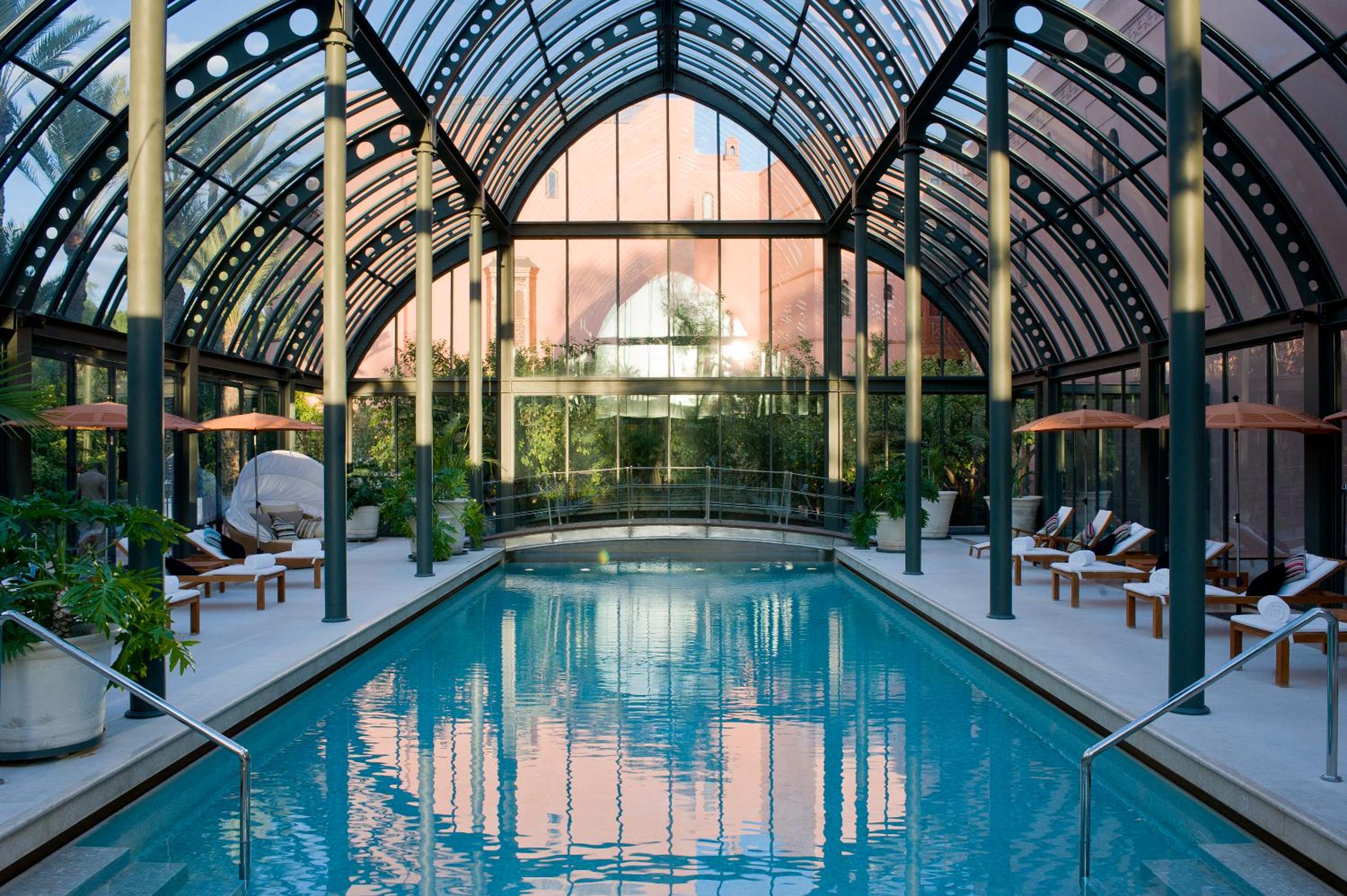
Beyond the hammam, the facilities include a large indoor pool housed in a glass-walled pavilion and a fully equipped gym for those who wish to maintain their routine. There is also a stunning outdoor pool set within the gardens, surrounded by private cabanas and lush vegetation. Unlike the more frantic pools found at other major Marrakech resorts, the vibe here is one of absolute tranquility. It is a place for quiet reflection rather than socialising, where the only sound is the occasional splash of water or the breeze through the palms. The spa and pool areas are the heart of the hotel’s leisure offering, providing a sanctuary that justifies the stay for many repeat visitors.
Positioned at the edge of the Medina
The hotel’s location is strategically chosen at the edge of the historic medina, tucked just inside the ancient city walls. This offers a middle ground between the atmospheric chaos of the old town and the wider, more modern streets of the Hivernage district. From the gates, it is a short walk to some of the city’s landmarks, but the sheer size of Marrakech means you will still need to rely on taxis or the hotel’s house cars for most excursions deep into the souks or to the Jardin Majorelle. The walk to the central Jemaa el-Fnaa square takes about fifteen to twenty minutes, which is manageable in the cooler months but can be taxing in the peak of summer.
While being within the walls provides a sense of authenticity, the hotel remains a fortified bubble of calm. The transition from the dusty, bustling streets of the city into the quiet, jasmine-scented grounds of the Royal Mansour is always a relief. However, guests should be aware that once you step inside, the city feels very far away. If your goal is to be in the thick of the action, waking up to the sounds of the street and the calls to prayer from a neighbouring mosque, a traditional boutique riad in the heart of the souks might be more appropriate. Royal Mansour is for those who want to experience Marrakech on their own terms, with the ability to retreat into total luxury at a moment's notice.
Suitability for families and couples
Royal Mansour is a versatile property, though its primary appeal is to couples seeking a romantic and intensely private getaway. The configuration of the riads ensures that you rarely see other guests, making it an ideal choice for honeymoons or special anniversaries. The sheer beauty of the surroundings and the level of service create an environment that feels celebratory and exclusive. For couples who value their own space, having a three-storey home with a private pool is a significant upgrade over even the best junior suites at other five-star properties in the area. It is a place where you can truly disconnect from the world.
Families are also welcomed, and the hotel has a surprisingly robust kids' club that offers activities rooted in Moroccan culture, such as craft workshops and storytelling. The multi-room layout of the larger riads is well-suited to those travelling with children, providing separate floors for parents and kids while maintaining a shared living area. However, the formal atmosphere of the hotel means it is best suited to well-behaved children who are comfortable in a quieter environment. The sheer amount of breakable, museum-quality art in the riads might also give parents of very active toddlers a moment of pause. For families who appreciate the finer things, it is a peerless choice that offers both space and security.
The final verdict on value
Determining the value of a stay at Royal Mansour depends entirely on your perspective. For a short, high-occasion trip of two or three nights, it is one of the few hotels in the world that justifies its astronomical rate through its physical fabric alone. The amount of labour and artistry that went into building this property is staggering, and staying here allows you to live inside a piece of contemporary history. However, for a week-long stay, the mathematics becomes more difficult to justify for many. A sensible strategy often employed by seasoned visitors is to split the trip, spending two nights here to enjoy the opulence and then moving to a high-end garden hotel or a boutique medina riad for the remainder of the holiday.
Timing your visit is crucial if you are looking for any semblance of a deal. Rates fall most dramatically in the heat of July and August, when the Moroccan sun can be unforgiving but the hotel remains a cool, air-conditioned sanctuary. Conversely, the window between Christmas and New Year sees prices soar to several times the summer rate, as the global elite descend on the city. Spring and autumn offer the best balance of weather and price, though booking well in advance is essential. It remains the most expensive address in Marrakech, but for those who want the absolute peak of Moroccan hospitality, there is simply no substitute for the Royal Mansour.


Rates fall hardest in July and August; the Christmas–New Year window is several times the summer price.