The Datai Langkawi review: a rainforest resort that earns its reputation
Teluk Datai, Malaysia — reviewed over six nights in a Rainforest Villa
FlexStays Editorial · 16 January 2024 · 7 min read · Our score 9.3/10
Ten million years of rainforest, a resident naturalist team and one of the best private beaches in Southeast Asia. Here's what six nights actually cost and felt like.
What we liked
- Genuine rainforest immersion with excellent resident naturalists
- Long, quiet private beach on the Andaman Sea
- Complimentary mountain bikes, nature walks and tennis
Worth knowing
- An hour from the airport on winding roads
- Monkeys will raid an unlocked balcony — this is not a complaint, just a fact
- Tourist tax of RM10 per room per night is payable at check-in for foreign guests
Ancient forest and coastal solitude
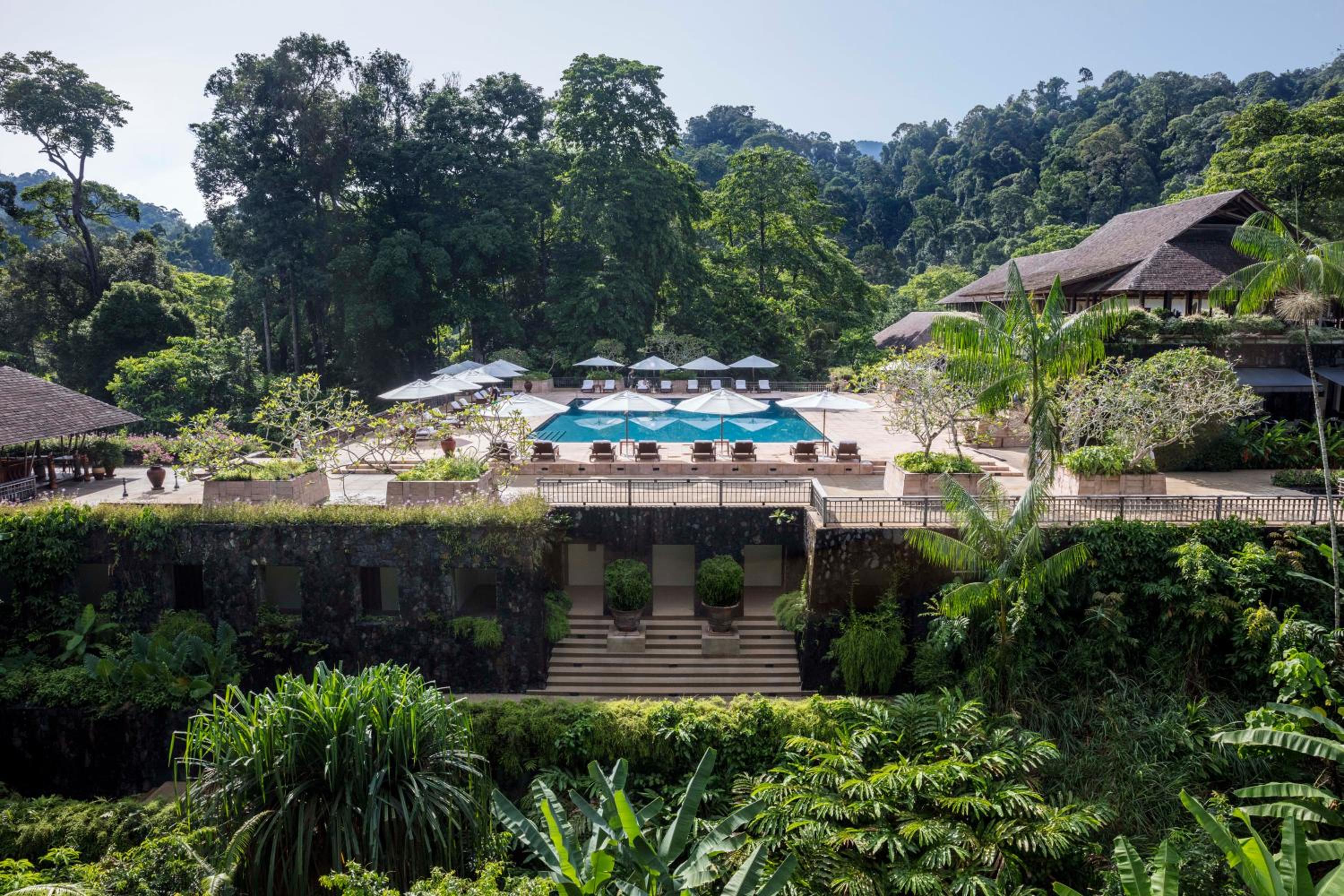
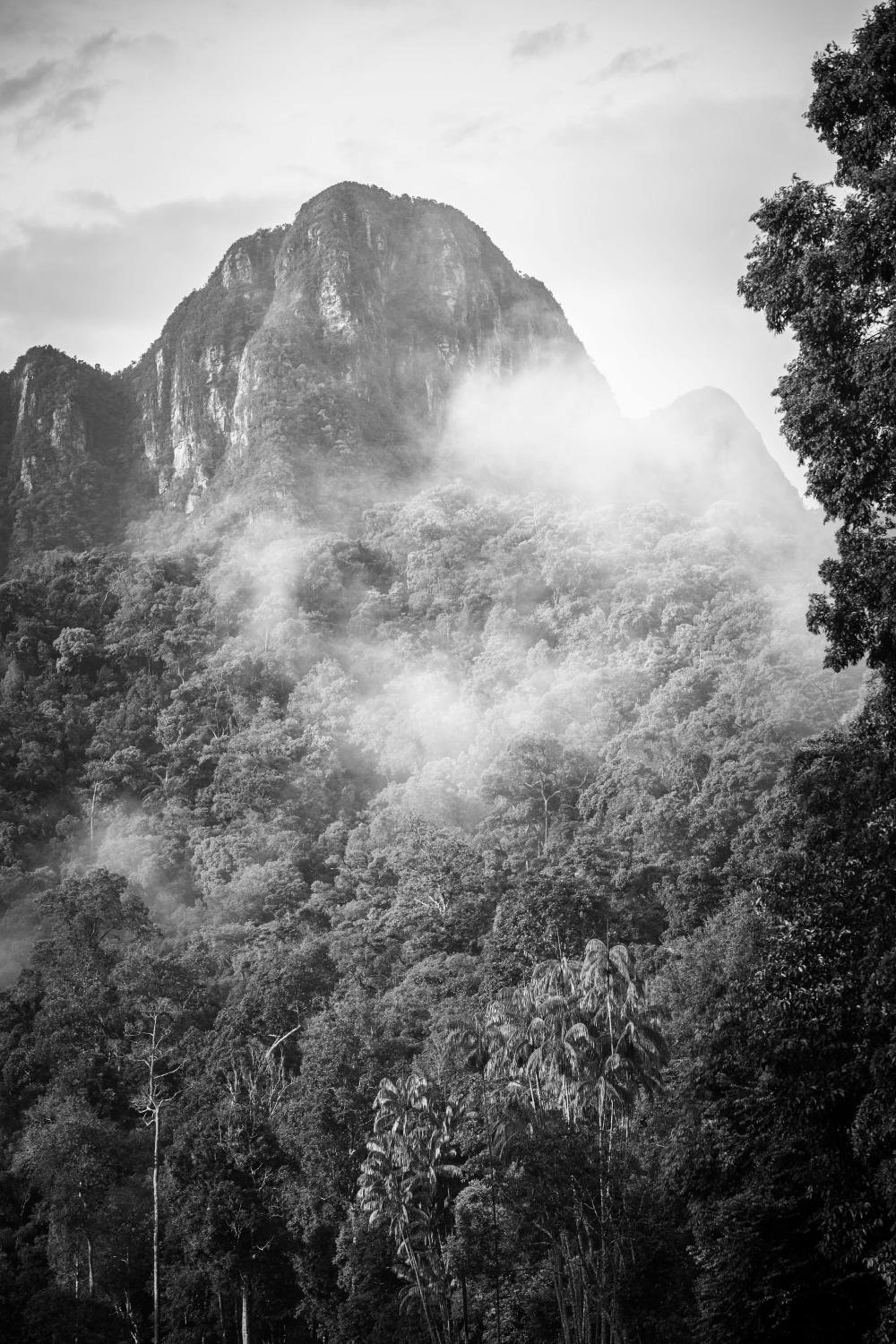
The Datai Langkawi occupies a singular position on the north-west tip of the island, tucked into a pocket of primary rainforest that experts estimate is ten million years old. This is not a manicured landscape where the jungle has been cleared to make way for a hotel; rather, the architecture by Kerry Hill and Didier Lefort was designed to thread through the existing canopy. The result is a resort where the natural world is the primary protagonist, surrounding every structure with a dense, prehistoric green that makes the outside world feel entirely irrelevant from the moment you pass the entrance gates.
The setting is defined by the dramatic topography of the Machinchang mountain range, which drops sharply into the calm, turquoise waters of the Andaman Sea. Datai Bay itself is widely regarded as one of the finest beaches in Southeast Asia, largely because it is entirely private to the resort and a neighbouring luxury property. There is no commercial development in sight, no passing boat traffic, and no public access. Reaching this sanctuary requires an hour-long drive from Langkawi International Airport along increasingly narrow and winding roads, but the isolation is precisely what ensures the resort remains a true wilderness retreat.
Life within the canopy
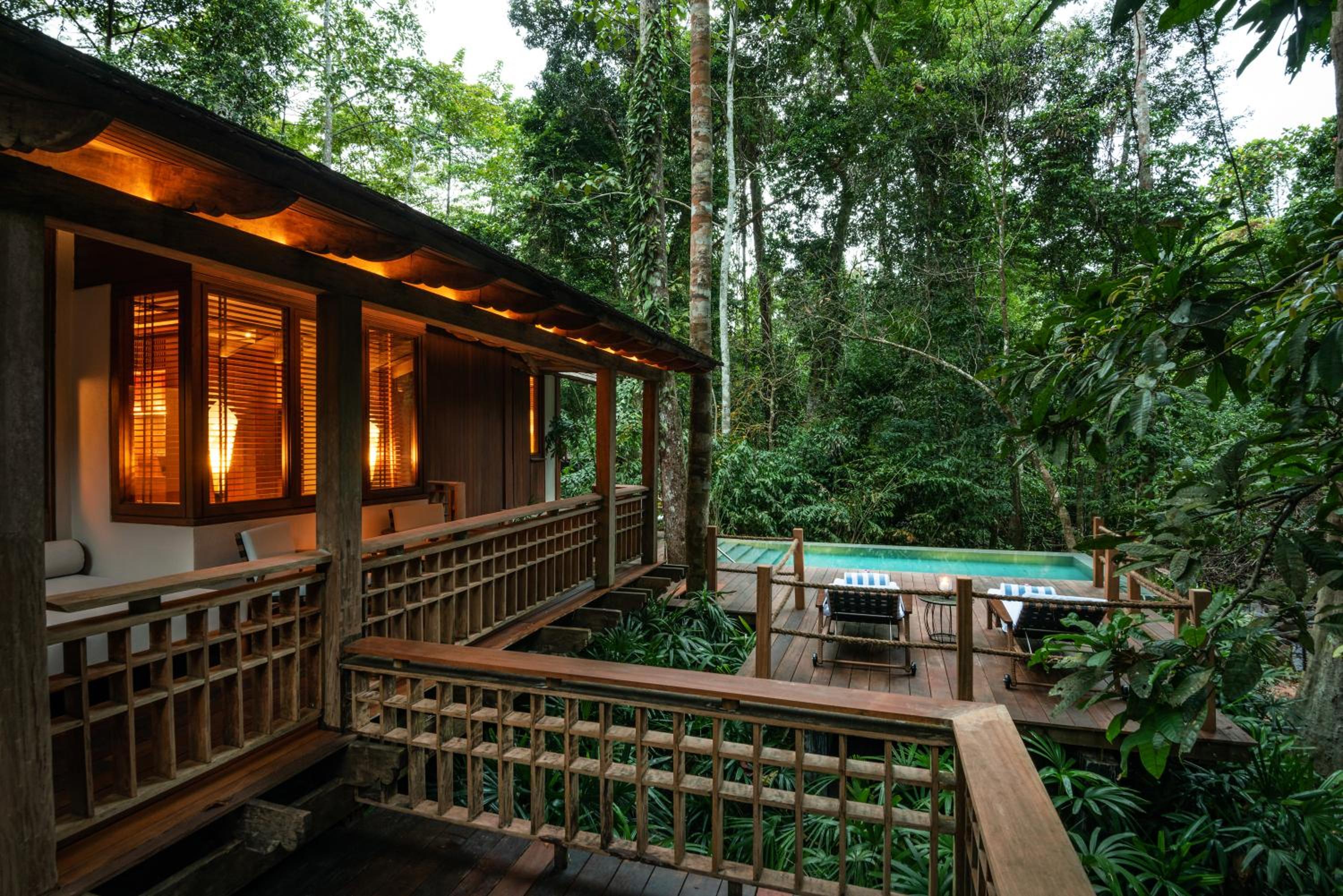
Accommodation is divided into three distinct experiences: the main canopy building, the rainforest villas, and the beach collection. Staying in a Rainforest Villa for six nights reveals the true character of the property. These are standalone timber structures elevated on stilts, connected by a network of jungle paths. The design avoids the trap of colonial pastiche, opting instead for a sophisticated palette of dark local timber, bamboo, and neutral stone. Following a comprehensive renovation in 2018, the interiors feel modern and robust, with excellent air conditioning that manages the tropical humidity and meticulous insect screening that allows for forest views without the local fauna moving in.
The highlight of the villa is the sense of immersion. From the deep soaking tub or the outdoor shower, you are looking directly into the ancient woodland. It is common to see dusky langurs leaping across the roof at breakfast or hornbills gliding past the balcony at dusk. The rooms are designed to be quiet, private sanctuaries, though guests must be mindful of the local macaques. These monkeys are professional opportunists and will raid any room with an unlocked balcony door. This is not a failure of the hotel service but a fundamental reality of living in a protected ecosystem, and it serves as a constant reminder of the resort's place within the natural world.
The naturalist perspective
What truly differentiates The Datai from its regional competitors is the resident naturalist team. Led by seasoned experts, the team operates a dedicated Nature Centre that serves as the heart of the resort. Their morning and night walks are not merely a perfunctory resort activity to keep guests occupied; they are deeply informative, high-quality excursions that provide context to the surrounding biodiversity. These walks are complimentary and kept to small groups, ensuring that the experience remains intimate as you track flying lemurs, vipers, and rare geckos through the undergrowth.
The commitment to conservation extends beyond guided tours. The resort has successfully integrated sustainable practices that feel genuine rather than performative, from an on-site bottling plant that eliminates single-use plastics to a sophisticated permaculture garden. For those who prefer independent exploration, the resort provides complimentary mountain bikes. Cycling the quiet, hilly roads around the northern tip of the island offers a different perspective on the terrain, though the humidity ensures it remains a strenuous morning activity before the afternoon heat settles in.
A culinary circuit of the forest
Dining at The Datai is an exercise in choosing between different environments, each with a specific atmosphere. The Gulai House is the undisputed highlight, a traditional Malay-style house tucked deep into the forest and reached via a winding woodland path. The menu focuses on authentic Malay and Indian flavours, serving rich curries and fresh seafood in a setting that feels entirely disconnected from a modern hotel. It is the first reservation any guest should make, ideally for an evening when the forest sounds are at their most orchestral.
For a more formal experience, The Dining Room overlooking the main pool handles Western and local classics with technical precision, while The Pavilion serves high-grade Thai cuisine on a platform elevated thirty metres above the forest floor. The Beach Club provides a more casual, alfresco setting for daytime meals and sunset cocktails on the sand. Because the resort's isolated location means there are almost no off-site dining options within easy reach, guests should budget for eating most meals on the property. The quality justifies the cost, but the lack of external competition is reflected in the premium pricing of the wine and spirits.
Wellness and the water
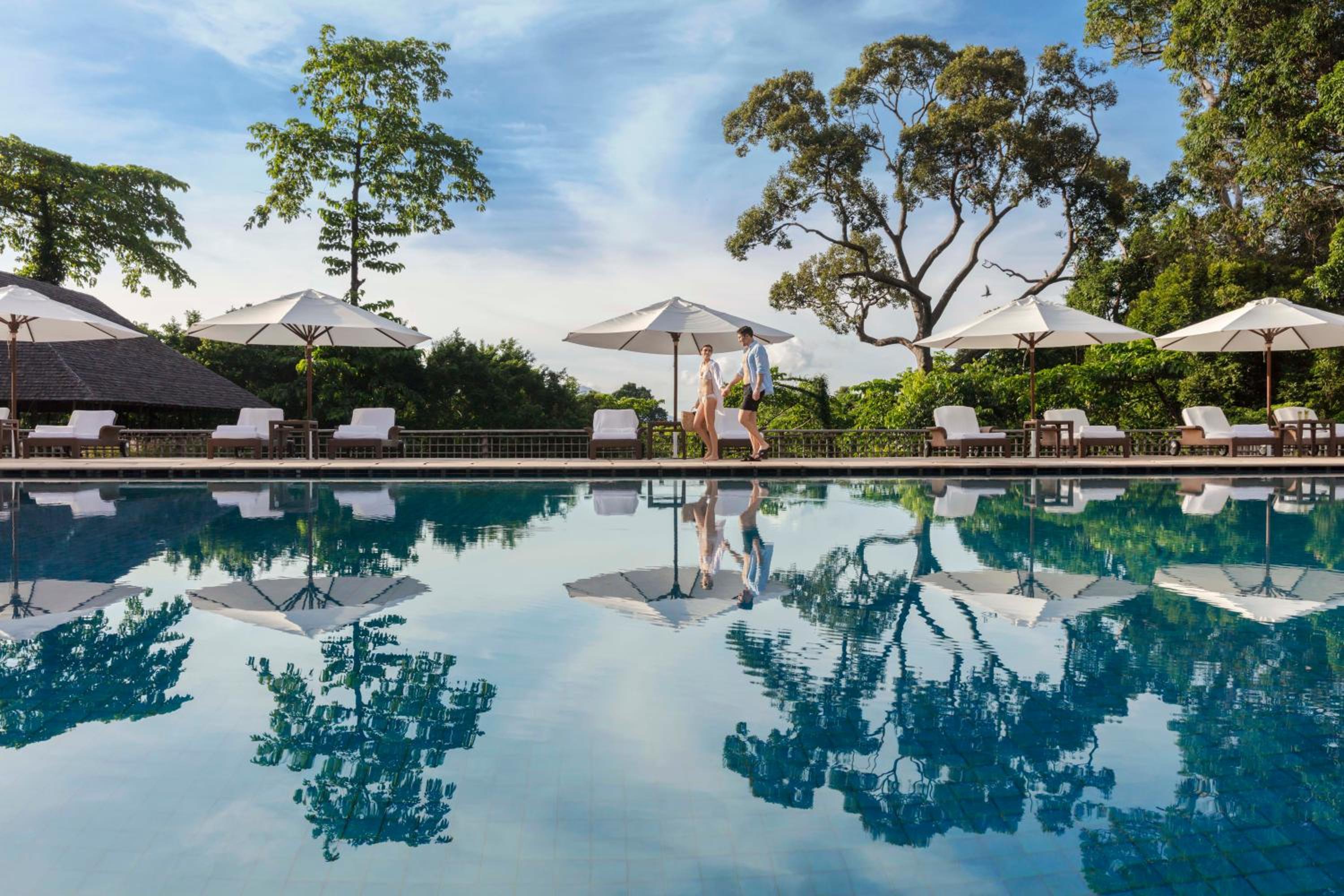
The spa at The Datai is integrated into the banks of a small forest stream, where the sound of flowing water replaces the typical piped-in ambient music found in city hotels. The treatments often incorporate local herbs and traditional Malay healing techniques, reinforcing the connection to the land. For those who prefer more active relaxation, the main swimming pool is a masterpiece of design, offering an infinity edge that seems to pour directly into the treetops. There is a second, family-friendly pool located near the beach for those travelling with children.
The beach itself remains the property’s greatest asset. Datai Bay features broad, firm sands and warm, shallow water that is exceptionally safe for swimming. Because of the crescent shape of the bay, the water is typically calm, making it ideal for the complimentary non-motorised water sports on offer. Whether you are taking a sea kayak out to explore the rocky coastline or simply lounging under the shade of mature trees that line the shore, there is a profound sense of space. Even at high occupancy, the beach never feels crowded, offering a level of coastal solitude that is increasingly rare in Malaysian tourism.
Service and social dynamics
Service at the resort is characterised by a quiet, efficient professionalism that reflects its long-standing reputation. The staff-to-guest ratio is high, and the tenure of the employees is noticeably longer than at many newer luxury resorts, resulting in a team that knows the forest and the property intimately. There is a genuine warmth to the hospitality that avoids the stifling formality often found in five-star hotels. Whether it is the housekeeping team timing their visits to your breakfast schedule or the pool attendants anticipating your need for iced water, the service feels intuitive and unobtrusive.
The resort attracts a diverse mix of couples seeking privacy and families looking for a nature-focused holiday. While it is certainly a romantic destination, the educational aspect of the nature programmes makes it an excellent choice for older children who are interested in wildlife. For those who want more than just a beach holiday, the inclusion of tennis courts and a championship golf course nearby ensures there is enough variety to fill a week-long stay. It is a place that encourages a slower pace of life, where the day is measured by the tides and the movements of the animals rather than any rigorous schedule.
Value and the seasonal swing
The cost of a stay at The Datai varies significantly depending on the time of year, and savvy travellers can find substantial value by timing their visit carefully. The peak dry season runs from December to March, when blue skies are guaranteed but room rates are at their highest. However, the shoulder months of May, June, and September offer a compelling alternative. During these periods, villa prices can drop by a third or more compared to the winter peak. While there is a higher chance of afternoon rain, these tropical downpours are usually brief and do little to diminish the experience; in fact, the rainforest is at its most vibrant and fragrant during the wetter months.
The final verdict is that The Datai remains one of the few resorts in the world where the natural setting genuinely outclasses the high-end hardware. It is a destination that demands a minimum of five or six nights to fully appreciate the rhythm of the forest. While the RM10 per room per night tourist tax is a minor bureaucratic hurdle at check-in and the drive from the airport is long, these are small prices to pay for access to such a pristine environment. For those who value silence, biodiversity, and architectural integrity over proximity to nightlife and shopping, it remains the definitive Langkawi experience.
The dry season, December to March, is peak. May, June and September are far cheaper and still mostly dry, with short afternoon rain.